
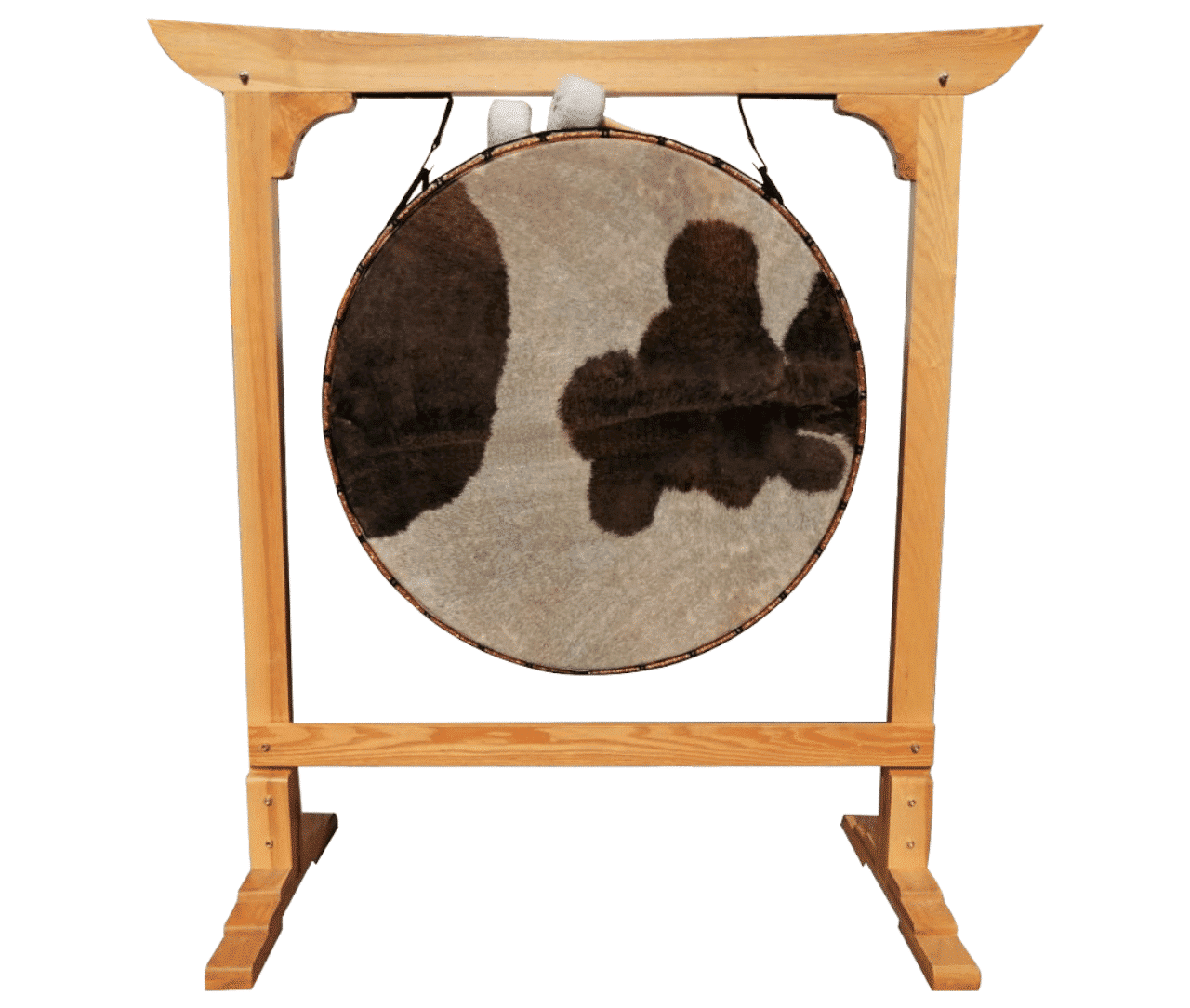
Description
THE SHAMAN DRUM The shaman drums in our shop are handmade. Making a shaman drum requires approximately 20 hours of loving and hard work, spread over 3 to 6 weeks to allow sufficient time for the entire process. Each shaman drum is unique, one-of-a-kind, both in sound and appearance. The drumheads are made of rawhide. Because rawhide reacts to heat and humidity, the tension of the head can change, and thus the pitch/sound. If there is a lot of moisture in the air, the sound can temporarily disappear from your drum. In freezing temperatures, your drumhead can be extremely tight. If you choose a fixed head, you will have to work with the elements. If you choose a tensioned drumhead, it is much easier to control the sound of your drum. Single-sided shaman drums: These shaman hand drums are easy to handle; you carry them in your hand using the handle on the back. A hand drum is very pleasant to use during (trance) dance and meditations. Traditional, fixed shaman drum. With these hand drums, the skin is directly stretched with strips of hide. Therefore, the skin tension can only be adjusted by carefully warming it, for example, with a hairdryer, or moistening it with a damp cloth or your own saliva. Adjustable shaman drum. The adjustable hand drum is particularly suitable for thinner skins. The skin tension can be easily adjusted to changing weather conditions using sliders. This makes these hand drums ideal for our climate. The skin is clamped between two iron rings, which are stretched with (plastic) rope. Very suitable for thicker skins. The iron does, of course, make the drum heavier. This shaman drum has a skin on each side that has a different pitch, so you can connect with the upper world on one side and the underworld on the other. Because a closed space is created, the resonance increases, giving shaman drums a distinctive, powerful, and full sound. Very suitable for group use. Here too, you can choose between a traditionally tensioned drum and a tensioned drum. A very large shaman drum, the pow wow, is also possible. If you have a heartfelt desire for a shaman drum, consider what resonates with you: Perhaps you have a special connection to a specific tree or animal that you want to incorporate into your drum? Do you enjoy working with the elements to keep your drum in tune? Do you use your drum outdoors or indoors more often? What will you use your drum for? What shape and size feels right for you? And what kind of sound do you hear? What else seems important to you? Good to know... is that the sound box, or frame, is usually made of a solid plank bent into an oval or round shape. Beech, oak, ash, maple, and elm are my favorite woods. For the tensioned, double-sided drums, birch plywood or a hollow tree trunk is used. An animal hide is used as the drumhead. Goat, horse, and deer are almost always available. A different hide is used if possible. The sound is also determined by the thickness of the hide, the type of hide chosen, the type of wood used, the size of the drum, and whether there is any hair on the hide. For example, a thick skin will produce a more solid, massive sound, while a thin skin produces a refined, longer-lasting, and melodious sound. A larger drum offers a wider variety of sounds, simply because the playing field is larger. A hairy drum sounds deeper, but also less clear. The size of the drums generally varies in diameter.


