
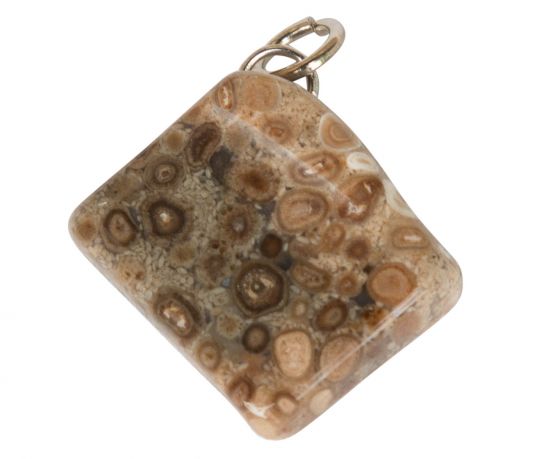
Description
Oölite (Ancient Greek: ᾠόν, ōón = egg, λίθος, lithos = stone, rock) is a clastic sedimentary rock formed by ooids, rounded grains composed of concentric layers of limestone or clay. Ooids are usually between a few millimeters and a few centimeters in size. Ooids are usually composed of limestone (calcite or aragonite), but they can also consist of phosphate, silica, dolomite, or iron-bearing minerals such as hematite. In the case of dolomite or silica, ooids may have formed by chemical weathering of limestone, in which case the original texture of the rock is lost. Ooids are formed in warm, lime-saturated water in which strong wave action occurs, such as in or just beneath the surf. The ooid usually begins to grow around a so-called nucleus; Small sand grains or shell fragments, as well as ooids composed entirely of calcareous silt, also occur. Waves roll these small particles back and forth, simultaneously functioning as crystallization nuclei for precipitating minerals. The grains grow by means of concentric shells of calcareous material. When an ooid becomes too heavy, it can slowly roll away to deeper water, where it settles. In this way, a layer of ooids is deposited at the point where the seabed reaches a depth where wave action no longer occurs. Oolite forms through burial of this sedimentary layer or through cementation, which can sometimes occur within a few decades.


