
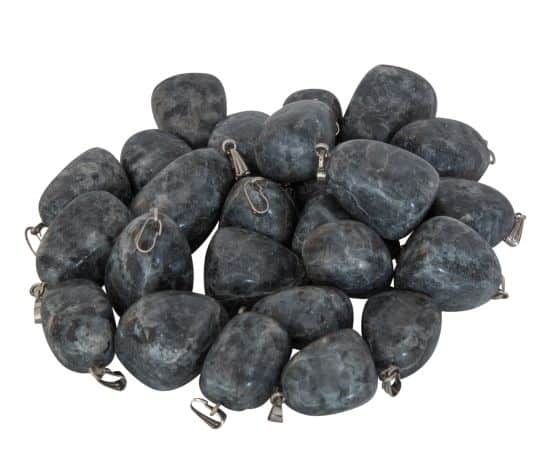
Description
Larvikite is an igneous rock containing a lot of plagioclase, primarily in flaky form. This gives the rock a characteristic blue-gray sheen and a "shiny" appearance when polished, although this is not caused by mica. Larvikite is a rock composed primarily of feldspars (primarily plagioclase), but also containing small amounts of quartz, nepheline, olivine, augite, hornblende, ilmenite, magnetite, apatite, zircon, and/or biotite. The feldspars have a flaky habit, making them resemble micas (when polished). However, feldspars are tectosilicates, and micas (or mica) are phyllosilicates. Tectonics has crisscrossed the larvikite complex with veins containing primarily nepheline. Larvikite is named after the place where it was first described: Larvik, Norway. Larvikite is primarily known from the Oslo region, an area in southern Norway where Larvik is also located. The area consists of a complex of igneous rocks, primarily monzonite. The volcanism that formed this complex has been dated to the Early Permian (297–292 Ma) using the U-Pb method. It is suspected that the igneous activity in the area is related to the opening of the present-day North Sea, a rift basin that ultimately did not lead to ocean formation (a so-called failed rift).


