
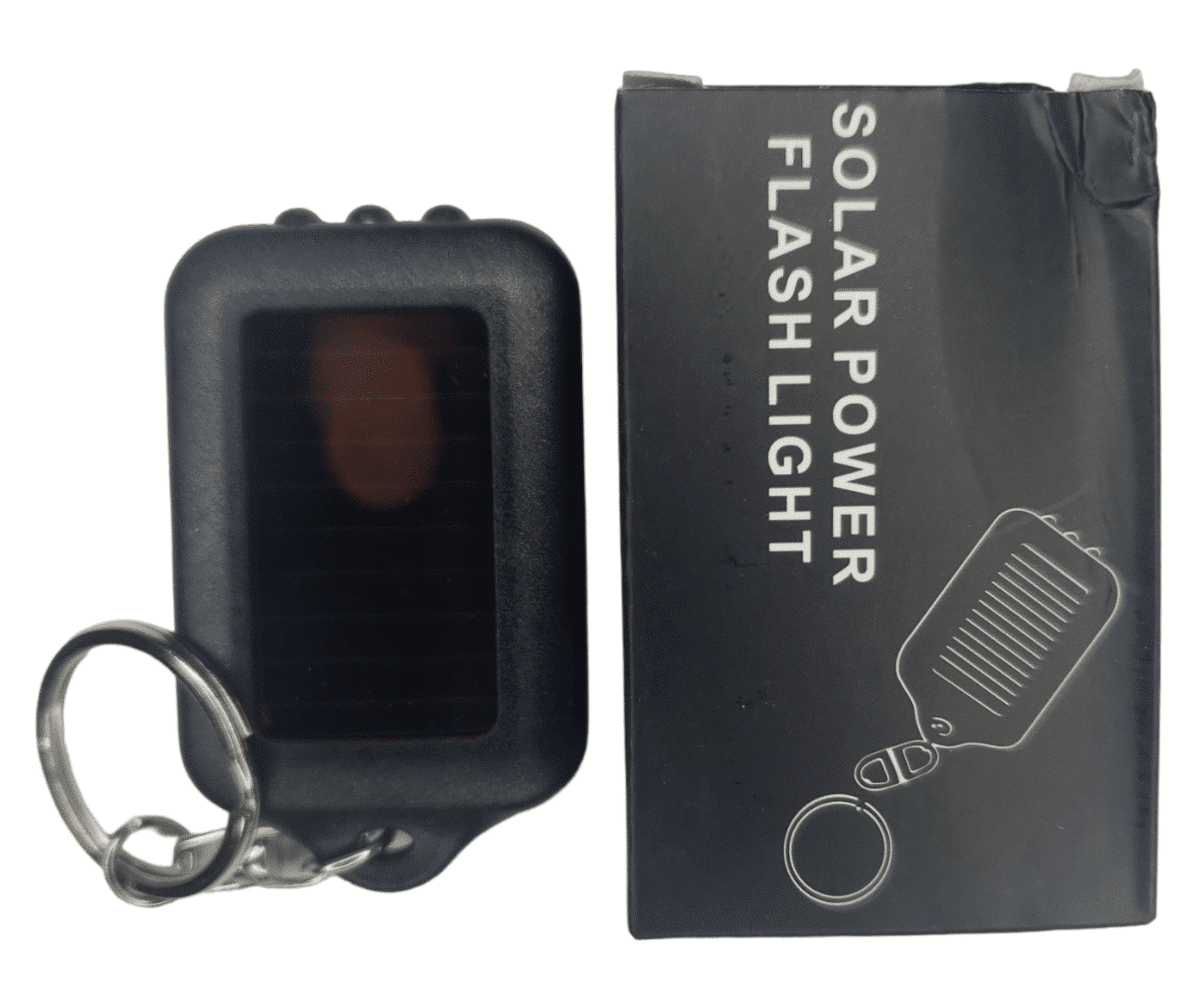
Description
A solar cell is an electrical cell that converts light energy into usable electrical energy. There are two types of solar cells. The best known is the solid-state photovoltaic cell, which is mounted in large numbers in solar panels. The second is the photoelectrochemical cell, which can be found in photoelectrochemical generators. The 'photovoltaic effect' was first observed in 1839 by the French physicist Alexandre-Edmond Becquerel. However, it wasn't until 1883 that the American scientist Charles Fritts utilized this phenomenon to build the first solar cell. Fritts's solar cell was constructed of semiconducting selenium coated with an extremely thin, transparent layer of gold. His solar cell could convert only 1 percent of light into electricity. Instead of generating energy, as Fritts himself envisioned, his inefficient solar cell was primarily used in photography as an exposure meter. Subsequently, the Russian physicist Alexander Stoletov created the first solar cell based on the principle of the photoelectric effect (previously discovered in 1887 by Heinrich Hertz), in which light is converted directly into electricity. It was Albert Einstein who only managed to explain this effect in 1905, for which he was awarded the Nobel Prize for Physics in 1921. The modern semiconductor solar cell based on silicon was patented in 1941 by the American Russell Ohl, then working at Bell Labs.[3] In May 1939, he accidentally discovered that an electric current was spontaneously generated in a silicon crystal when he shone a desk lamp on it. The cause turned out to be a crack in the crystal, later called the p-n junction. His pioneering work in this field would eventually lead to the invention of the transistor. Building on Ohl's work, a more efficient solar cell was developed at Bell Labs in 1954 by Gerald Pearson, Calvin Fuller, and Daryl Chapin. By doping silicon with arsenic, they built a solar cell with an efficiency of 4.5 to 6 percent. Due to the high production costs, solar cells were initially used only for specialized applications, primarily in space travel. For example, the American satellite Vanguard 1, in 1958, was the first to transmit radio signals from space using a 1-watt solar cell. Only after the oil crisis in the 1980s were solar cells designed with an efficiency exceeding 20 percent, based on gallium arsenide (GaAs).


