
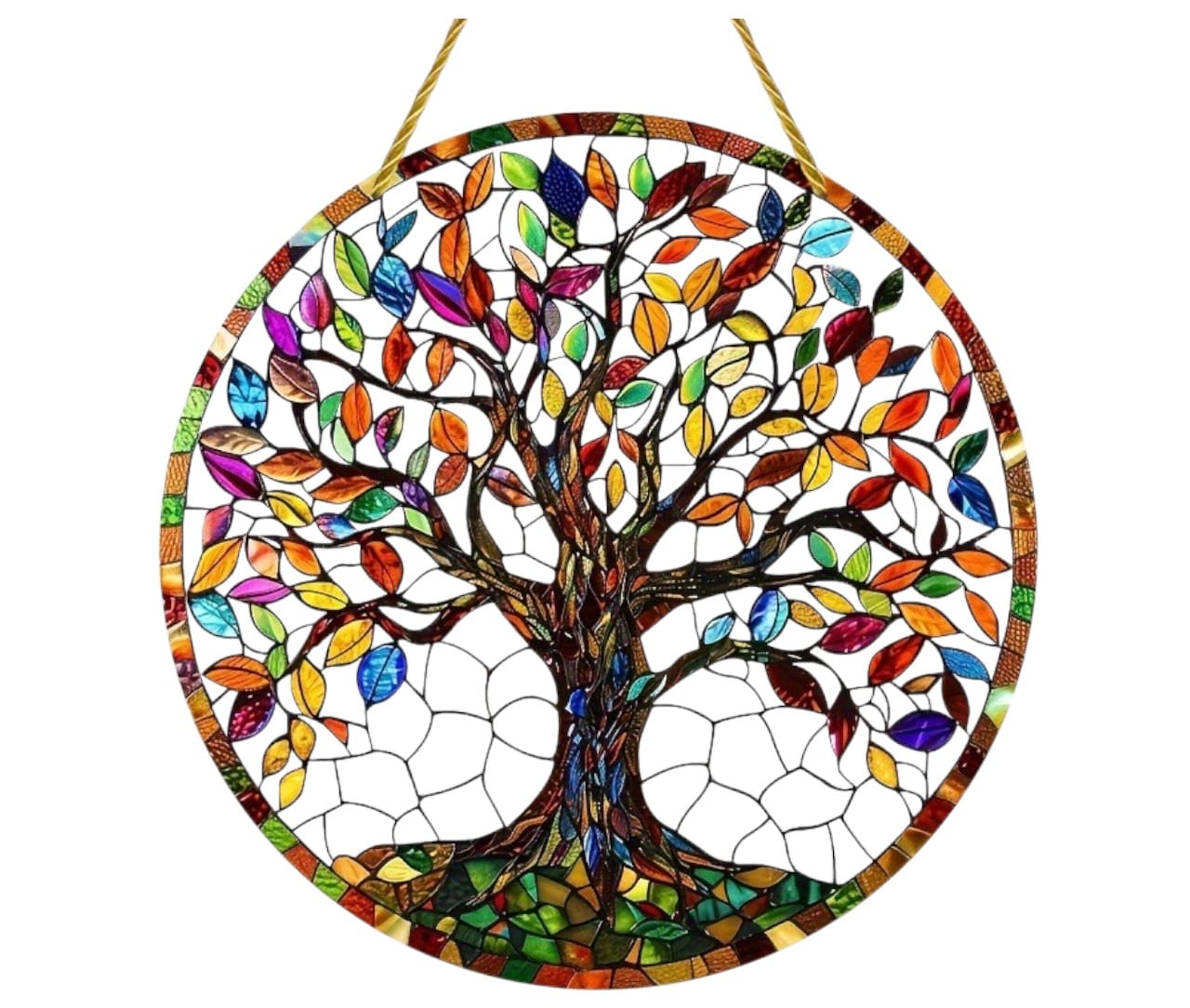
Description
The biblical tree of life or tree of life (Hebrew: עץ החיים; Etz haChayim) is mentioned in the book of Genesis in verse 2:9 as the tree that was planted by God in the Garden of Eden (Paradise) together with the tree of the knowledge of good and evil and whose fruit gives eternal life (immortality). After Adam and Eve ate from the tree of knowledge of good and evil, the Bible records that both were banished from the Garden of Eden to prevent them from eating the fruit of the tree of life: “Then the LORD God said, ‘Now the man has become like us, knowing good and evil. Therefore, do not let him take fruit from the tree of life, so that he may eat and live forever.’” (NIV, Gen 3:22). According to the biblical account, Adam and Eve were thus separated from the tree of life and made mortal. In the Christian New Testament, this banishment from the Garden of Eden is compensated for by the “planting” of the new tree of life (Jesus) alongside humanity. In the Book of Revelation, the Koine Greek phrase xylon zoës (ξύλov ζωής) is used three times (2:7, 22:2, and 22:19). used, which in Dutch translations is literally translated as "tree of life" or "tree of life" (22:19 is also translated as "book of life" in some translations). The "tree of life" is used several times in the book of Proverbs in connection with Wisdom. As an image, it describes the value of wisdom. Wisdom is a tree of life for those who embrace it (Prov. 3:18). A righteous person plants a tree of life (Prov. 11:30). Fulfilled desire (as opposed to unfulfilled hope) is a tree of life (Prov. 13:12). Calm words (as opposed to a lying tongue) are a tree of life (Prov. 15:4). The writer of Proverbs seems to have a predilection for the image of the tree of life, but it is never explicitly explained. The image itself likely possesses sufficient power for the writer. The tree of life is depicted in several examples of sacred geometry and forms a central point in the Kabbalah (the mystical study of the Torah), where it is represented as the sefirot. The Germanic tree of life. The Irminsul was an important shrine for the Saxons of the eighth century AD, presumably with great symbolic significance. It is mentioned and briefly described in the Annales regni Francorum, the Translatio St. Alexandri by Rudolf of Fulda, and in the Gesta Hammaburgensis ecclesiae pontificum (Book I, Chapter 8) by Adam of Bremen. Both of the latter use exactly the same words and describe the Irminsul as a large, upright wooden trunk that, according to the Saxons, supported the entire world. Adam of Bremen, however, claims to have adopted the information from Einhard (c. 770-841). His work, however, has not survived. In Einhard's words, according to Adam of Bremen: Truncum quoque ligni non parvae magnitudinis in altum erectum sub divo colebant, patria eum lingua Irminsul appellantes, quod Latine dicitur universalis columpna, quasi sustinens omnia. Translated, this means: They also used to worship a wooden trunk of considerable size, raised high in the open air, which they called Irminsul in the language of their native land, which in Latin is called universalis columna (= all-column), as it were, supported everything. The Kabbalistic Tree of Life is a model used by Hermetic Kabbalists to symbolize the entire universe and its origins. This Tree of Life has a different form than the one used by Jewish Kabbalists. The first publication to feature this Tree of Life was Athanasi Kircher's Oedipus Aegypticus from 1652. Robert Fludd adopted this diagram in a modified form in his Complete Works from 1617.


