
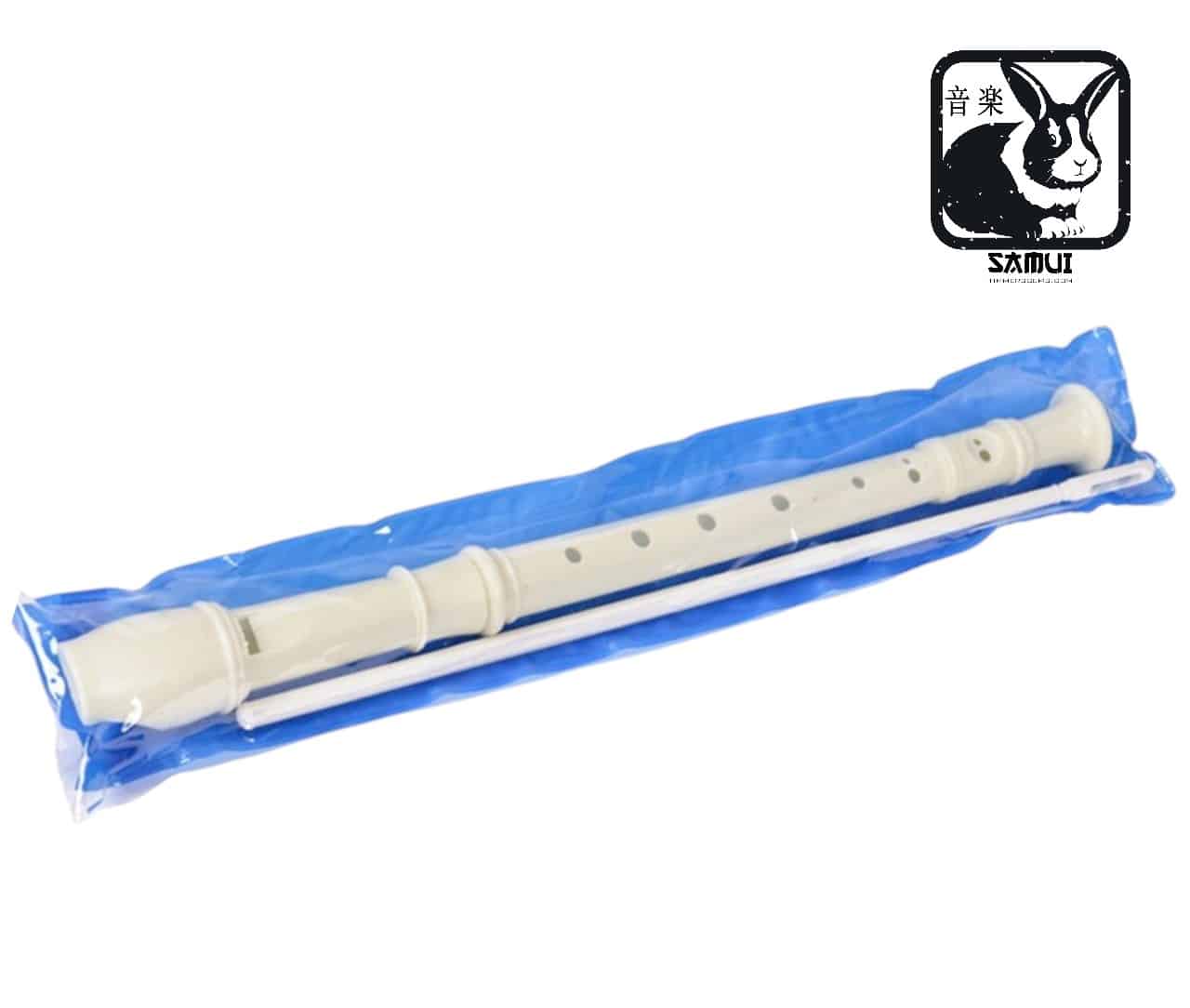
Description
The recorder, a wind instrument made of wood or plastic, is equipped with a labium and a mouthpiece that facilitates blowing. This instrument belongs to the category of "bell flutes." The mouthpiece has a cylindrical bore with a block of softer wood, which explains the name "recorder." This block creates a narrow slit that directs air to the labium. The softer wood of the block is sensitive to moisture from breath, which can affect playability over time. Flutes are among the oldest musical instruments and already existed in prehistoric times. Different cultures have their own variations, such as the dvojnice, a double flute from Dalmatia. There are two basic ways of blowing: directly through a mouthpiece in the case of bell flutes, and laterally without a mouthpiece in the case of transverse flutes, which also includes the pan flute. Both types probably originally had a fingering with six finger holes, as is still the case with the Irish tin whistle. The traverso, built before the invention of the modern transverse flute by Theobald Böhm, was also based on this design. A true recorder is distinguished by a thumb hole for the left thumb and often an eighth-hole for the right little finger, indicating a more recent design. The precursors of the modern recorder may date back to the 14th century, but they only truly became popular from 1500 onwards, paralleling the rise of the upper middle class and the spread of printed music.


