

Description
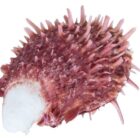
The spiny oysters (Spondylus) belong to the only genus of bivalves in the Spondylidae family.
The shell (or in snails, also called the "snail shell") is an external skeleton (usually made of lime (calcite and/or aragonite) and other minerals, produced by a mollusk (phylum Mollusca). The shell provides the animal with stability and protects it from external influences such as predation, injury, dehydration, etc. The shell grows along with the mollusk throughout its life. The science that studies all aspects of mollusks is called malacology. A branch of malacology that deals exclusively with the shell is called conchology. In the past, it was wrongly believed that malacology did not deal with the shell, and some people made a very clear distinction between malacology and conchology. In current practice, the terms are often used interchangeably and are more or less considered synonyms. Shells can be used to pave a walkway, which is then sometimes called a "shell path." Shells can also be burned to make shell lime, which was often used as a building material in the past instead of cement.
Shells from Cebu.


