



Description
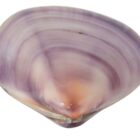
A bivalve shell is a part of the body, the exoskeleton or shell, of a bivalve mollusk. In life, the shell of this class of mollusks consists of two hinged parts, or valves. Bivalves are very common in virtually all living environments, including saltwater, brackish water, and freshwater. Bivalves' shells frequently wash up on beaches (often as separate valves) and along the edges of lakes, rivers, and streams. Bivalves, by definition, possess two shells, or valves, a "right valve" and a "left valve," which are connected by a ligament. The two valves usually articulate with each other using structures known as "teeth," which are located along the hinge line. In many (but not all) bivalve shells, the two valves are symmetrical along the hinge line—if truly symmetrical, such an animal is said to be equivalved; if the valves differ in size or shape, they are inequivalved. If symmetrical front-to-back, the valves are said to be equilateral and otherwise considered inequilateral. The exoskeleton serves not only for muscle attachment but also for protection against predators and mechanical damage. The shell has several layers and is typically made of calcium carbonate precipitated in an organic matrix. It is secreted by part of the molluscan body along with the mantle. Bivalves are collected by professional and amateur conchologists and are sometimes harvested for commercial sale in the international shell trade or for use in glue, chalk, or varnish, sometimes at the expense of the local ecology.
Clam shells.


