

Description
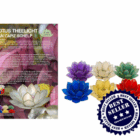
Fantastic tea light holders from the island of Caipirinha, where these shells (actually a type of mollusk, or oysters) have been crafted for generations into true works of art like these tea light holders. They are also used to make beautiful lamps and other objects. Their translucency makes them very popular, creating stunning effects when backlit. Placuna placenta is a bivalve species in the Placunidae family. The scientific name of the species was first validly published in 1758 by Linnaeus.
This tea light holder has deep meaning because it's made in the shape of a sacred Buddhist lotus. Pure purity that will positively illuminate an entire room and give you a good feeling as the fantastic light creates a wonderful atmosphere. Lotus-shaped lamps are found in many Buddhist temples but are also popular in rooms where healing is practiced, as a room becomes purer and the healing powers are better received.
The lotus has great significance in Hinduism and Buddhism. The flower symbolizes divine birth and purity. The lotus is the attribute of the bodhisattva Samantabhadra. The Hindu god Vishnu is also usually depicted with a lotus flower. Goddesses depicted as auspicious consorts of a god often hold a lotus. Deities, Buddhas, and bodhisattvas usually stand or sit on a lotus throne: a pedestal in the shape of an open lotus flower. The lotus flower was also used in Persian antiquity. There are several depictions of Darius I and Xerxes I in which they are depicted with a lotus flower.


