
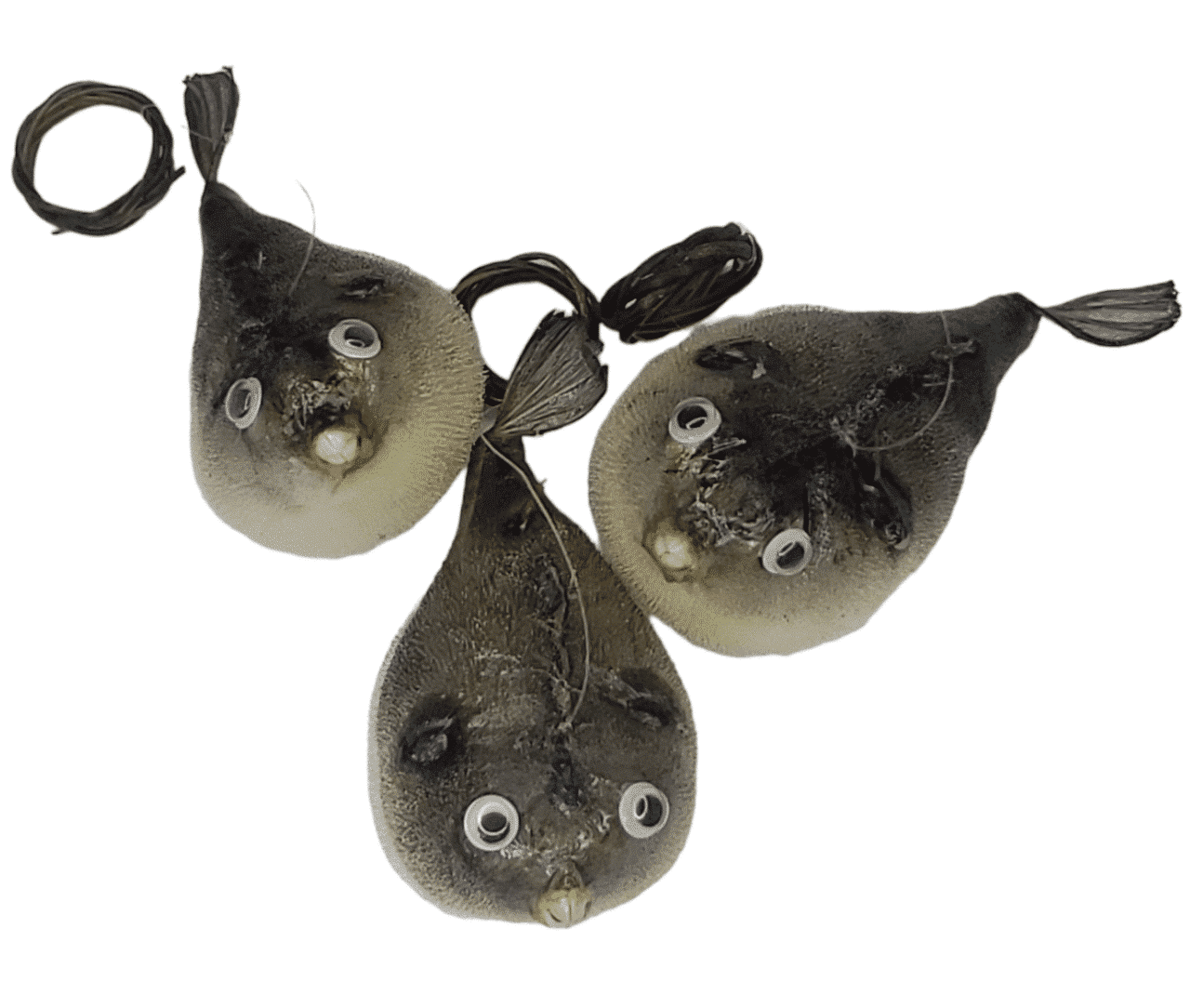
Description
Pufferfish are typically small to medium-sized, although a few species, such as the Mbu pufferfish, can reach lengths exceeding 50 cm (20 in). Tetraodontiformes, or pufferfish, are most characterized by their beak-like four teeth—hence the name, which combines the Greek terms "tetra" for four and "odous" for tooth. The upper and lower arches are fused with a prominent midsagittal demarcation, used to break apart and consume small crustaceans. The lack of ribs, a pelvis, and pectoral fins is also unique to pufferfish. The notable absence of bony and fin features is due to the pufferfish's specialized defense mechanism, which expands by drawing in water through a buccal cavity. Pufferfish can also possess a variety of structures, from caltrop-like dermal spines, which replace typical fish scales, and can range in coverage from covering the entire body to leaving the frontal surface empty. Tetraodontidae generally have smaller spines than their sister family Diodontidae, with some spines only being visible when inflated.


