
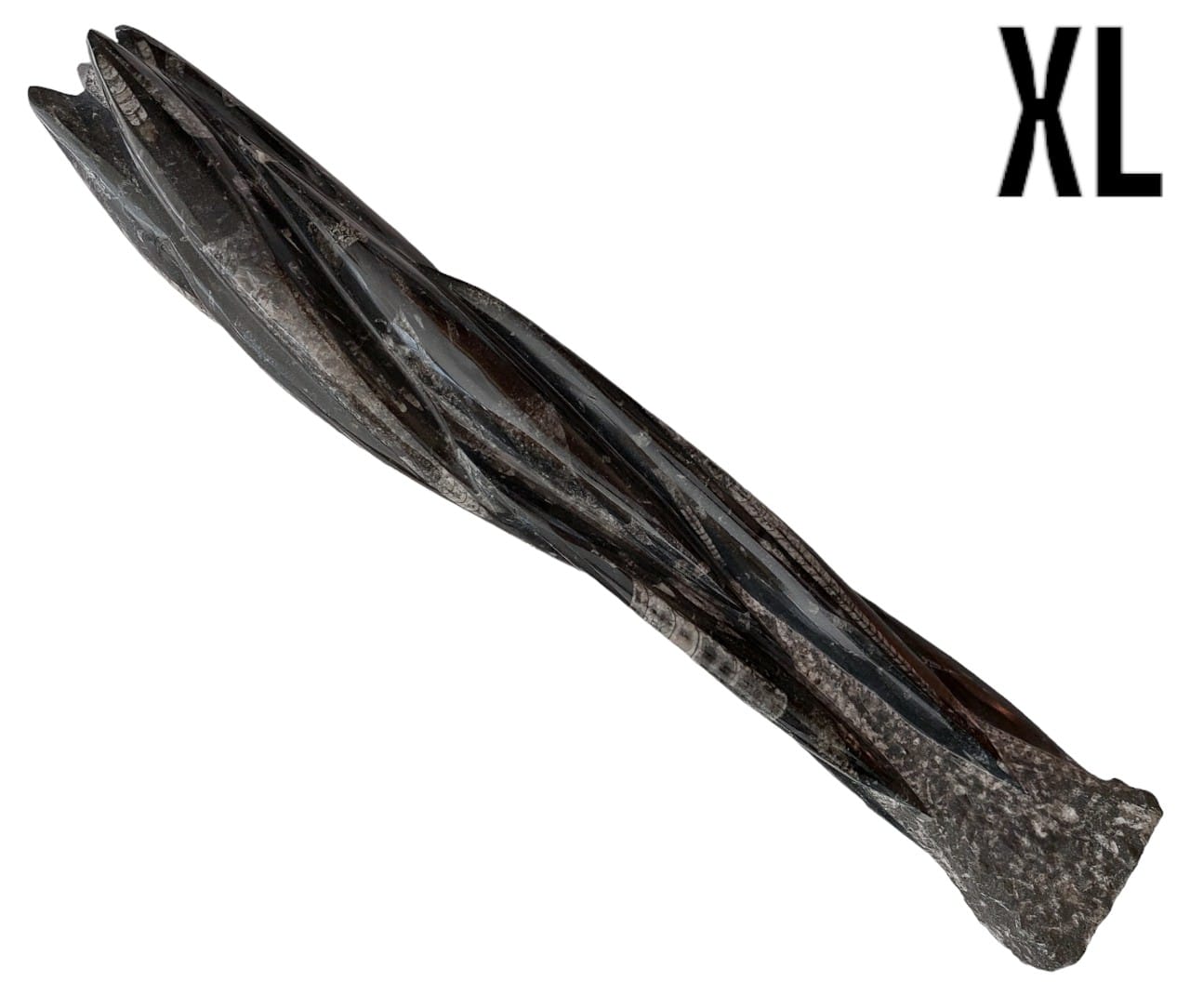
Description
Fossils are all the remains and traces of plants and animals preserved in rock. Although it is often thought that fossils must be "petrified," this is not always the case. Many fossils are not petrified, and even from very old rocks, fossil remains are known that have hardly changed. The idea that fossils are always very old is also incorrect. Many young fossils are known, formed during a period when humans already existed on Earth. The science that studies fossils is called paleontology. This field of knowledge aids in the study of the sequence of rocks, a branch of geology called biostratigraphy. Because the remains of life only fossilize under specific conditions, fossil information is limited and by definition incomplete. The word "fossil" often brings to mind the bones of dinosaurs or mammoths. Indeed, the hard parts of an organism have the greatest chance of being preserved through fossilization. For vertebrates, these are the bones and especially the teeth. Softer tissues are preserved only in exceptional cases and are therefore much rarer. They are only preserved if they are quickly buried under a layer that protects them from rotting or grazing. With only the hard parts, it is sometimes difficult to form a good picture of the complete organism. A good example of this is the Conodonta, which for a long time was known only from their teeth. Only when an impression of the remains of such an animal was found was it revealed that it was a primitive form of the phylum Chordata. In other animal groups, other hard parts, such as shells, are often fossilized.


