
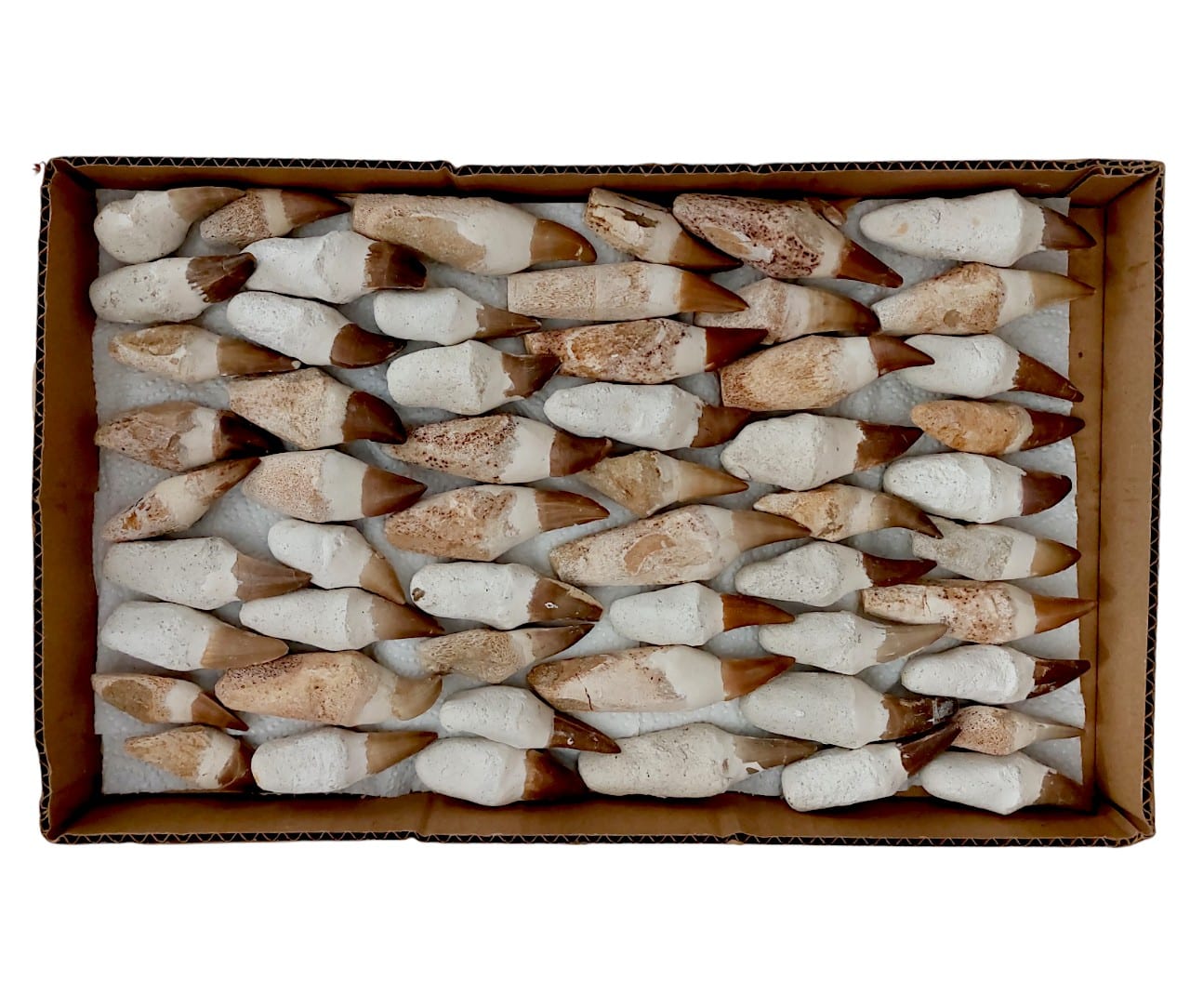
Description
Mosasaurus, also known as the Maasashagedis in Dutch, is a genus of extinct marine dinosaurs from the Mosasauridae family. The first fossil remains were found near Maastricht in the Sint-Pietersberg, which lies on the banks of the Meuse River (Latin: Mosa), and Mosasaurus is named after the river. The species of the genus lived during the Maastrichtian, the last part of the Cretaceous Period, approximately 75 to 65 million years ago. Fossils indicate that Mosasaurus had a worldwide distribution, but many remains have been found primarily in the Atlantic Ocean and adjacent seas. The bodies of all species were enormous: the type species, M. hoffmannii, is estimated to have reached a length of about 18 meters. Mosasaurus was likely an active predator with good eyesight. The skull and jaws were robust and capable of devouring almost any other animal, including ammonites, bony fish, sharks, squid, birds, and other marine reptiles. It is suspected that Mosasaur, as a top predator, played an important ecological role. The discovery history of Mosasaur dates back to the eighteenth century. The impressive skull, discovered around 1780 near Maastricht, was seized by French revolutionary troops due to its great scientific value. In 1808, the naturalist Georges Cuvier concluded that the fossil belonged to a giant sea lizard related to monitor lizards. The fossil likely played a significant role in his nascent ideas about extinction. To this day, the precise evolutionary relationships of Mosasaur remain a matter of debate.


