
Description
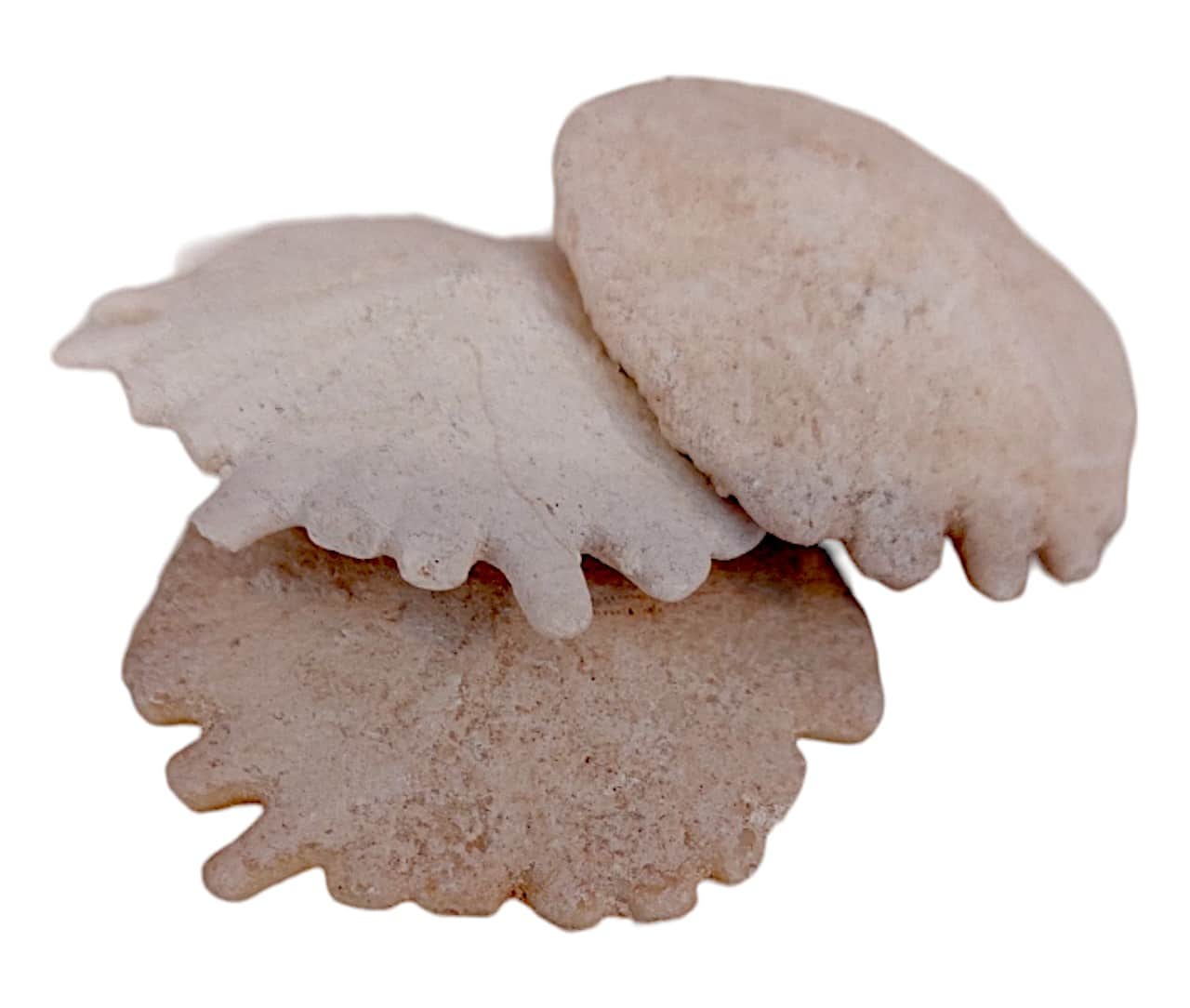
Sea urchins and sea apples (sea urchins, heart urchins) are spiny, aquatic invertebrates. They form the class Echinoidea, which belongs to the phylum Echinodermata (echinoderms). Sea urchins are usually more or less spherical, heart-shaped, or disc-shaped and have an inverted mouth. They have a hard shell, usually covered with spines. This shell consists of small plates with knobs on which the spines are movably attached by means of a ball and socket joint. In many species, the spines serve for locomotion. Some species burrow with the help of their spines. The spines also have a protective function. A few species can even expel venom. Between the spines are short-stalked, diverse pedicellariae. These also serve for defense and for cleaning the skin. See also: sand dollar. From the mouth (underside) to the anus (on the back, at the top = aboral), regular sea urchins (Regularia, such as Psammechinus and Echinus) have 10 pairs of arranged rows of suckers. The plates through which these suckers emerge are called ambulacral plates. The other plates are the adambulacral plates. All Regularia possess a built-in chewing apparatus: the Aristotelian lantern. In irregular sea urchins (Irregularia, such as Echinocyamus and Echinocardium), the suckers are located on the upper side of the shell, where they form a flower- or star-shaped figure. In this group, the anus is located on the side and the mouth is on the underside. They also lack an Aristotelian lantern. Sea urchins usually feed on plant matter or detritus. Some species also eat animal matter. They usually bring their food to the mouth using tube feet and spines.


