



Description
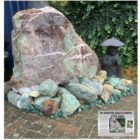
We don't often say we have something truly special, but this fantastic piece of truly top-quality jade was a wonderful discovery in Myanmar. Located in Myitkyina, in northern Myanmar, this piece of jade emerged in early 2020 from one of the best mines in former Burma (now Myanmar). It took two weeks to bring this remarkable jade find to the surface. The quality is superb; in China, they make the most precious jade figurines from it. It took a world trip to get this masterpiece to Berghem, but it was more than worth it.
Jade is the common name for two minerals used as gemstones: jadeite and nephrite. Fake jade also exists in the economy, but is less valuable than genuine jade. The two can be distinguished by the fact that genuine jade changes color over time after years of contact with human skin. Jade comes in many different colors: green, brown, black, or cloud white, ranging from very light to very dark. Like soapstone and chalcedony, jade has been cut and worked by the Chinese for thousands of years. Originally used as tools, jade became popular as jewelry during the Han Dynasty. The only place where nephrite is found in China is in Xi'an, near the city of Khotan. In Chinese culture, only worked jade is considered valuable. A lump of unworked jade is therefore of lesser value. The Sanzijing mentions it as a comparison to education: "If one does not polish jade, it is not a precious thing. If a person does not learn, his life has no meaning, for he does not know the norms, values, and respect of life and will therefore never become talented" (玉不琢不成器人不學不知義). Jade is considered a valuable stone that wards off evil forces. If one wears a piece of jade on one's body for a long time, for example, on a red string around the neck, one will see the jade slowly change color. During the 2008 Beijing Olympics, the medals were adorned with jade.


