
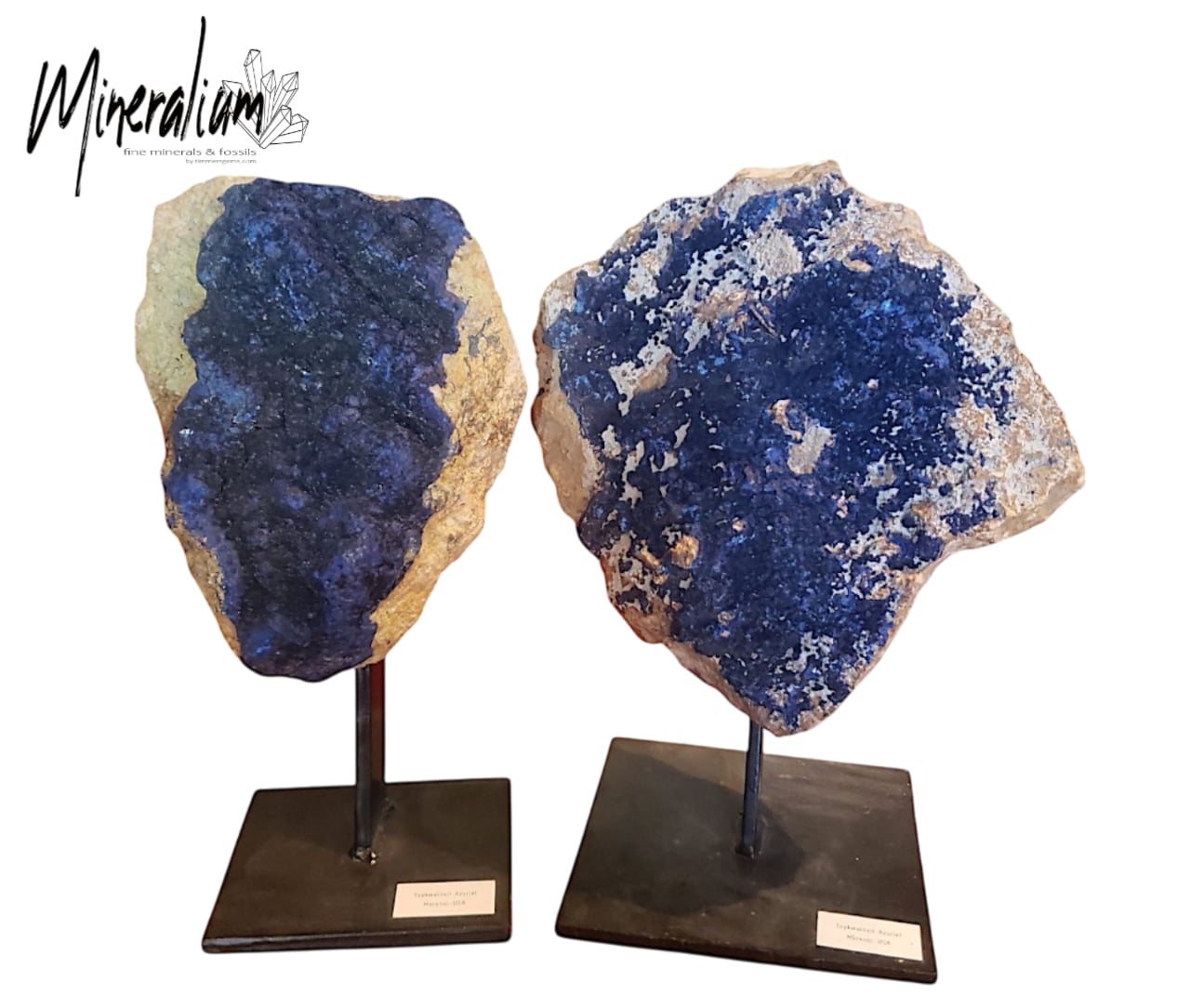
Description
The name azurite derives from the Persian lazhward, meaning blue. This became lazurium in Latin and later azurium or azurium citramarinum. The names for blue colors in many Romance languages are derived from this. Another Latin name, found in Pliny the Elder, is lapis armenius. Azurite has been used for centuries as a blue pigment. The natural crystals found were ground, washed, and sieved for this purpose. The heavier the grinding, the darker the pigment. Applications of it are known from ancient Egypt. Its use in the West remained occasional until the early Middle Ages, when knowledge of the production method for Egyptian blue was lost. As prosperity increased again in the later Middle Ages, the custom of using azurite as a blue pigment came from China via Persia. It was formerly known as Azurro Della Magna, from the Italian, and in German it was also called Bergblau. In Dutch, this means mountain blue, azure blue, or copper lazure. Azurite is often used in jewelry these days and is a popular mineral among collectors.


