
Description
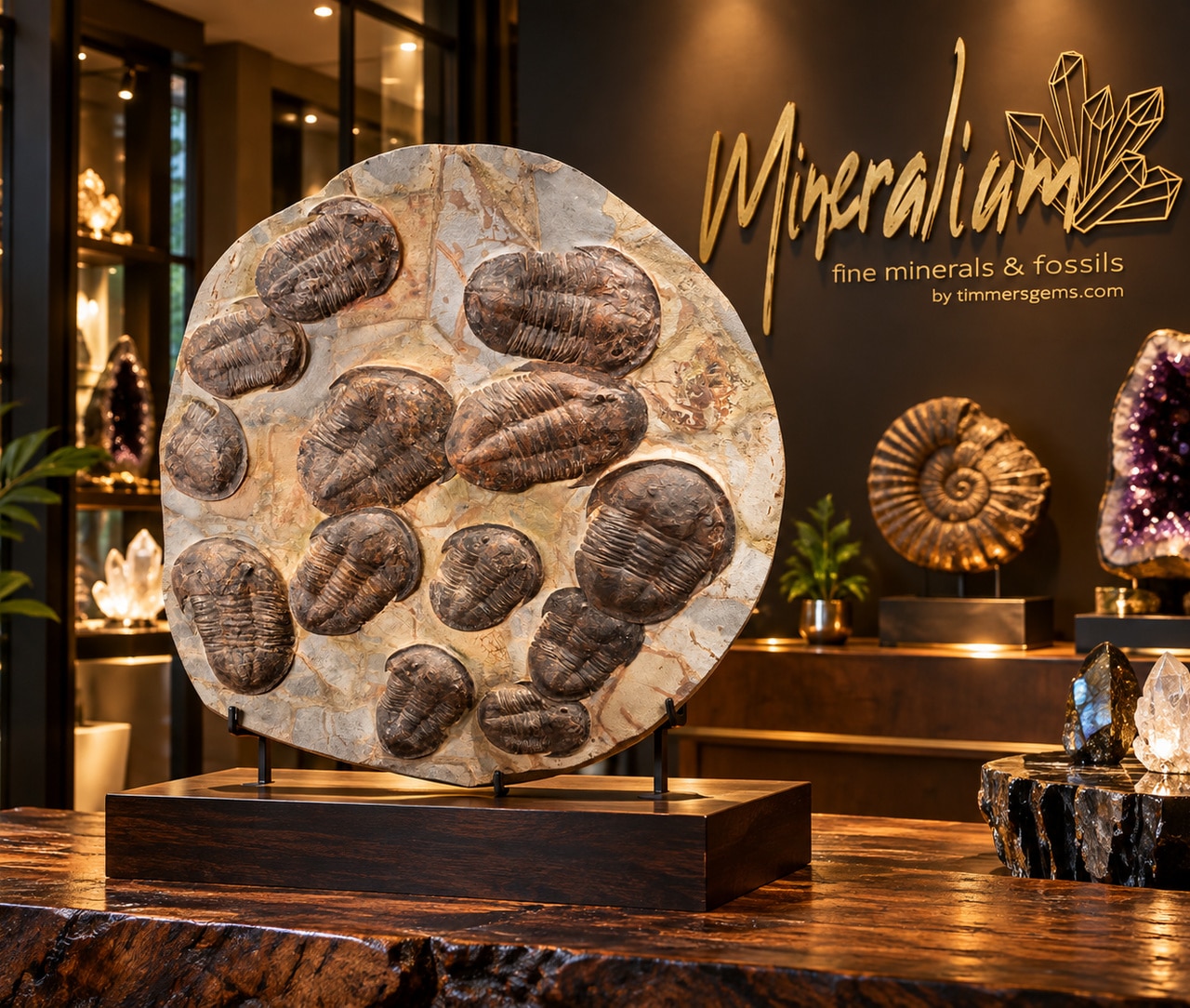
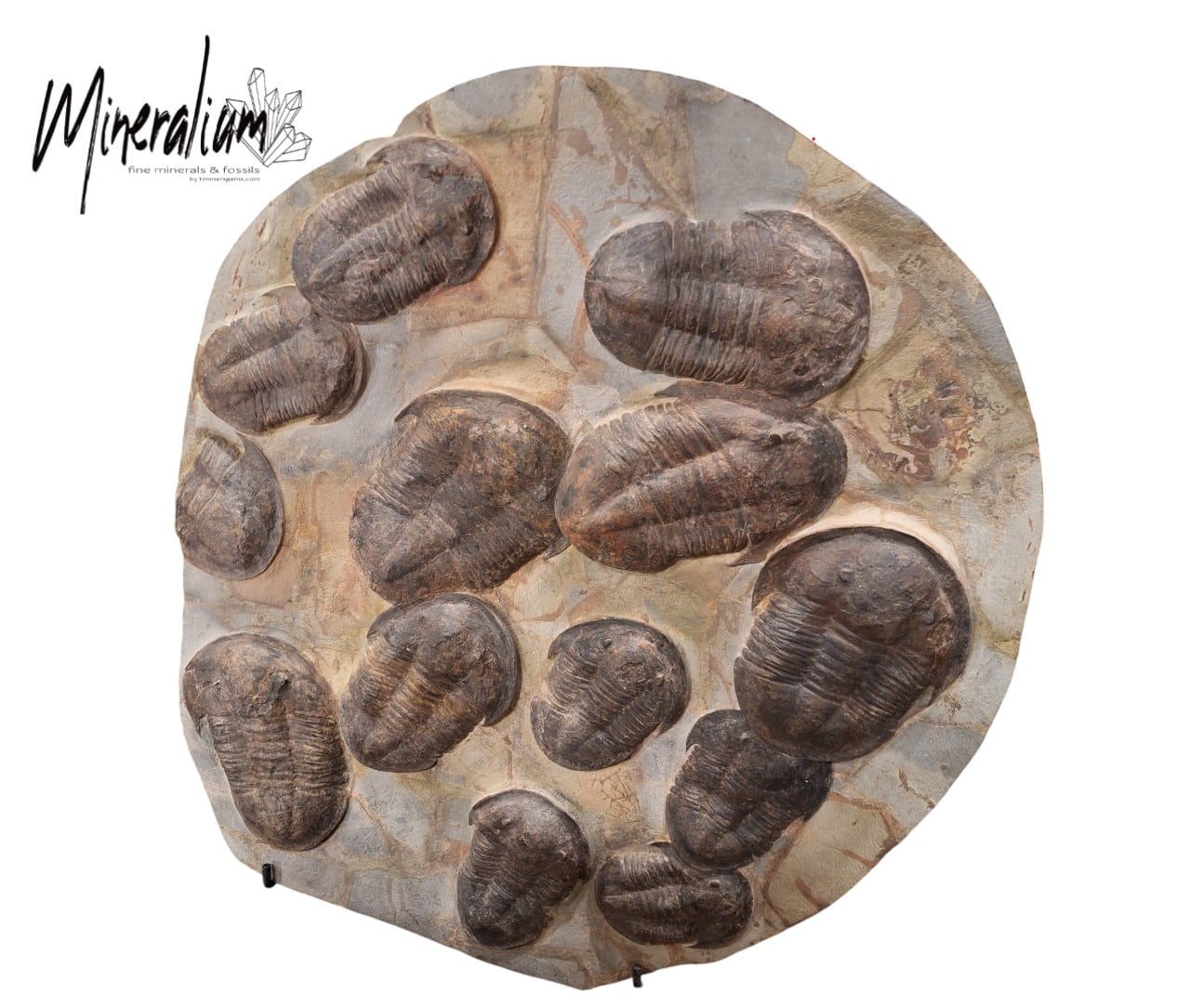
Museum copy of Paradoxides on stand
An exceptional and impressive museum specimen featuring Paradoxides trilobites, professionally presented as a fossil plate on a stand. Measuring a remarkable 106 x 89 cm , this is an imposing natural history object that immediately draws attention.
Paradoxides is one of the best-known and largest trilobite genera of the Cambrian. Some specimens could reach a length of approximately 37 centimeters. This large fossil slab therefore constitutes a remarkable collector's item for museums, fossil collections, exclusive interiors, and enthusiasts of exceptional paleontological objects.
Price: € 14,500.00
Paradoxides belongs to the largest trilobites
Paradoxides is a genus of extinct trilobites that lived during the Middle Cambrian, over 500 million years ago. Trilobites were marine animals with a hard external skeleton and are among the best-known fossils from the Paleozoic.
Paradoxides is distinguished by its large size. While many trilobites grew to only a few centimeters, some Paradoxides species could reach tens of centimeters.
A famous large specimen of Paradoxides davidis reached a length of approximately 37 centimeters.
A fossil over 500 million years old
The Cambrian is one of the most important periods in the development of animal life on Earth. During this period, many different groups of marine animals originated and developed.
Paradoxides lived in the seas of the Middle Cambrian and thus belongs to a group of animals that inhabited the seabed more than half a billion years ago.
A large Paradoxides slab is therefore not only decorative, but above all an impressive tangible relic from a very early chapter in the history of life on Earth.
Characteristic construction of Paradoxides
Paradoxides is recognizable by its large, elongated body shape and striking anatomy.
The head, or cephalon, is broad and approximately hemispherical. The free cheeks end in long, narrow, and backward-curved spines.
The eyes are strikingly shaped and gave the animal a very wide horizontal field of vision.
The long middle section of the body, the thorax, consisted of approximately 19 to 21 segments depending on the species . Along these segments were distinct, posteriorly curved lateral spines.
The posterior part of the body, the pygidium, was relatively small in proportion to the rest of the animal.
Exceptional eyes with a large field of vision
Trilobites were among the earliest animals known to have complex eyes. In Paradoxides, these eyes were sickle-shaped and positioned in such a way that the animal had a very large horizontal field of vision.
This must have been important for an animal that moved over or just above the seabed and needed to be able to detect both food and potential enemies.
It is precisely the combination of the broad head, striking eyes, and long spines that gives Paradoxides its characteristic appearance.
World-renowned Cambrian trilobite
Fossils of Paradoxides and closely related forms are known from various areas that were part of ancient seas during the Cambrian.
The genus is therefore of great importance in paleontology. Paradoxides is regularly used in the study and comparison of rock layers from the Middle Cambrian.
The name Paradoxides was published in 1822 by the French naturalist Alexandre Brongniart, making the genus a well-known name in paleontological literature for more than two centuries.
Monumental fossil slab of 106 x 89 cm
With dimensions of approximately 106 x 89 cm, this Paradoxides plate belongs to the category of large display and museum pieces.
The plate is supplied on a stand, allowing it to be displayed immediately as a freestanding fossil object.
Due to its large size, the fossil comes into its own particularly well in, for example:
- a museum
- an exclusive fossil collection
- a mineral or fossil gallery
- an entrance or reception area
- an office or boardroom
- a luxury interior
- a natural history presentation
Museum-worthy collector's item
Large fossils of high presentation quality are considerably rarer than smaller commercial fossils. The size, appearance, and presentation on a stand make this plate an object intended as a centerpiece.
For a serious fossil collector, such a plate can form an important centerpiece of the collection.
Even in a museum, gallery, or exclusive retail environment, a fossil slab of over one meter immediately attracts attention.
A look at life in the Cambrian seas
A Paradoxides fossil tells the story of a world that was totally different from the Earth today. More than 500 million years ago, there were no dinosaurs, birds, or mammals yet.
The seas were populated by trilobites and other early invertebrates, among others. Paradoxides was one of the remarkably large inhabitants within that world.
Thus, this fossil plate forms not only an impressive decorative object but also a tangible connection to a very early phase in the evolution of complex animal life.
Characteristics of the museum specimen
Product: Large fossil plate with Paradoxides
Fossil: Paradoxides trilobite
Geological period: Middle Cambrian
Age: over 500 million years
Dimensions: approx. 106 x 89 cm
Presentation: complete on stand
Category: museum and collector's item
Special feature: Paradoxides belongs to the largest known trilobite genera
Maximum known length: approx. 37 cm in very large specimens
Price: € 14,500.00
buy Paradoxides fossil plate
Anyone looking for a truly exceptional Paradoxides fossil on a stand will find an impressive natural history collector's item in this plate.
With its dimensions of 106 x 89 cm, monumental presentation, and fossils of one of the best-known large trilobites from the Cambrian, this is a piece that seems made for a prominent place in a museum, gallery, or high-end private collection.
The combination of size, age, and paleontological significance makes this Paradoxides museum plate a special object for the serious collector.


