
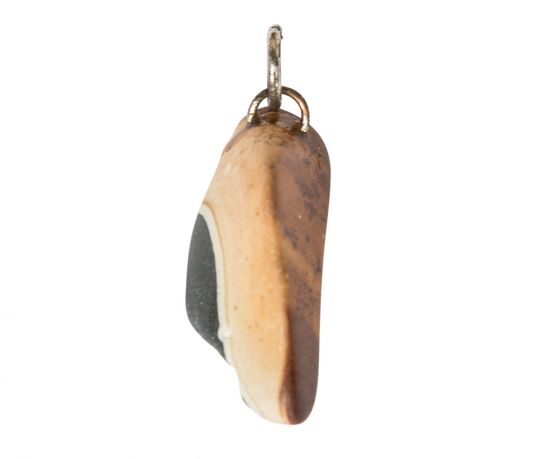
Description
Utah Wonderstone and Kanab Stone are both types of sandstone found in Utah, United States. Wonderstone is found in Kanab, Utah. The sandstone is characterized by bands and streaks in brown, yellow, and red hues. Rhyolite, or aged liparite, is a granite-like igneous volcanic rock with a felsic composition. It is an effusive rock and consists of more than 68% silica. The name rhyolite is derived from the Greek words ῤεῖν (rheîn), "to flow," and λίθος (líthos), "stone." Rhyolite has small crystals due to the extrusive formation of the rock. In effusive rocks, the magma that reaches the surface (and is henceforth called lava) cools rapidly to very rapidly, leaving no time for the minerals to develop large crystals. Rhyolite typically consists of the minerals quartz, potassium feldspar, and plagioclase. Traces of more mafic minerals such as biotite, amphibole, and pyroxene may be present in rhyolite. Due to the high silica content in rhyolite, the molten rock is very viscous (sticky). Consequently, lava flows with a rhyolite composition will be much less mobile than the low-viscosity mafic, and therefore fast-flowing, basalts. If rhyolite cools so quickly that it cannot form any crystals at all, it is called a vitrofier, or volcanic glass. The most common variety of this is obsidian.


