
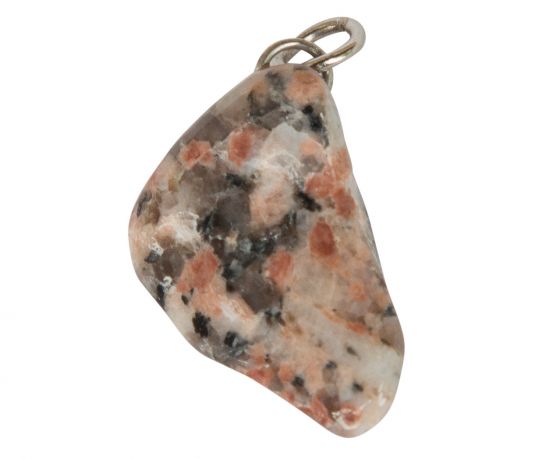
Description
Granite is an acidic (or felsic) igneous rock composed primarily of three minerals: quartz, feldspars (potassium feldspar and plagioclase), and micas (muscovite and/or biotite). Amphibole also occurs in granite. The ratio of minerals varies, but quartz is generally the dominant component (approximately 50%). The quartz is usually gray, the feldspar can be colored (cream, pink for potassium feldspar, and (milky) white for plagioclase), and the mica is usually brown or light gray. Granite is a deep-lying rock, meaning it formed by the solidification of magma underground. (This is in contrast to an effusive rock such as basalt, which solidified near or at the Earth's surface.) Because granite solidified at depth, the minerals had time to form crystals as they cooled slowly. When granite is exposed to very high pressures and temperatures, it transforms into gneiss, a metamorphic rock. The word "granite" is derived from the Latin word granus, meaning "grain." It refers to the often granular appearance of granite. Strictly speaking, this is incorrect, because igneous rock is not composed of grains (which is typical of sedimentary rocks), but of crystals. In materials science, however, crystals are also called grains. Coarsely crystalline would be a more accurate term.


