
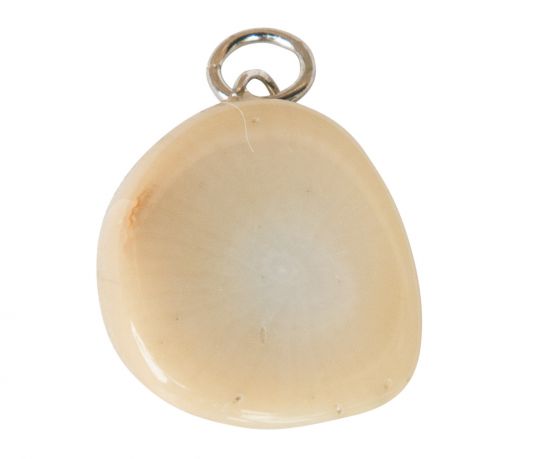
Description
Coral is a collective name for marine animals in the Anthozoa class. These are tiny creatures, only a few millimeters long, that, with their tentacles, resemble a sea anemone (see also Coelenterates). These creatures, also called polyps, often live in colonies. The brain coral in the photo is an example of such a colony. Coral colonies are often part of coral reefs. Currently, approximately 4,500 species of coral are known. Locally, they form large colonies—banks and reefs—for example, the 2,500-km-long Great Barrier Reef off the coast of Australia. Corals grow in all warm and clean seas and oceans. In historical times, they were common in the Mediterranean Sea near Tunisia, Algeria, Italy, and the islands of Corsica, Sardinia, and Sicily. The red and orange-red forms still occur here, but to a lesser extent. Coral also grows in the Bay of Biscay. White corals are known from the Sea of Japan, salmon-red off the coast of Taiwan, pink corals grow near Midway Island in the Pacific Ocean, and black species grow near the Hawaiian Islands. Corals from the Red Sea and the Indian Ocean are famous, occurring near the islands of Socotra and Mauritius, among other places. Black corals, called kabars, can reach up to 3 meters in length and have a diameter of 25 cm. This species also lives in the South China Sea and off the coast of Cuba. Blue corals, called akosi, were discovered off the coast of Cameroon, possibly the rarest coral species. Blue corals have also been described from Funafuti Atoll in the Pacific Ocean. Recently, yellow-brown corals have been found in the North Atlantic Ocean near the Aleutian Islands and Alaska.


