
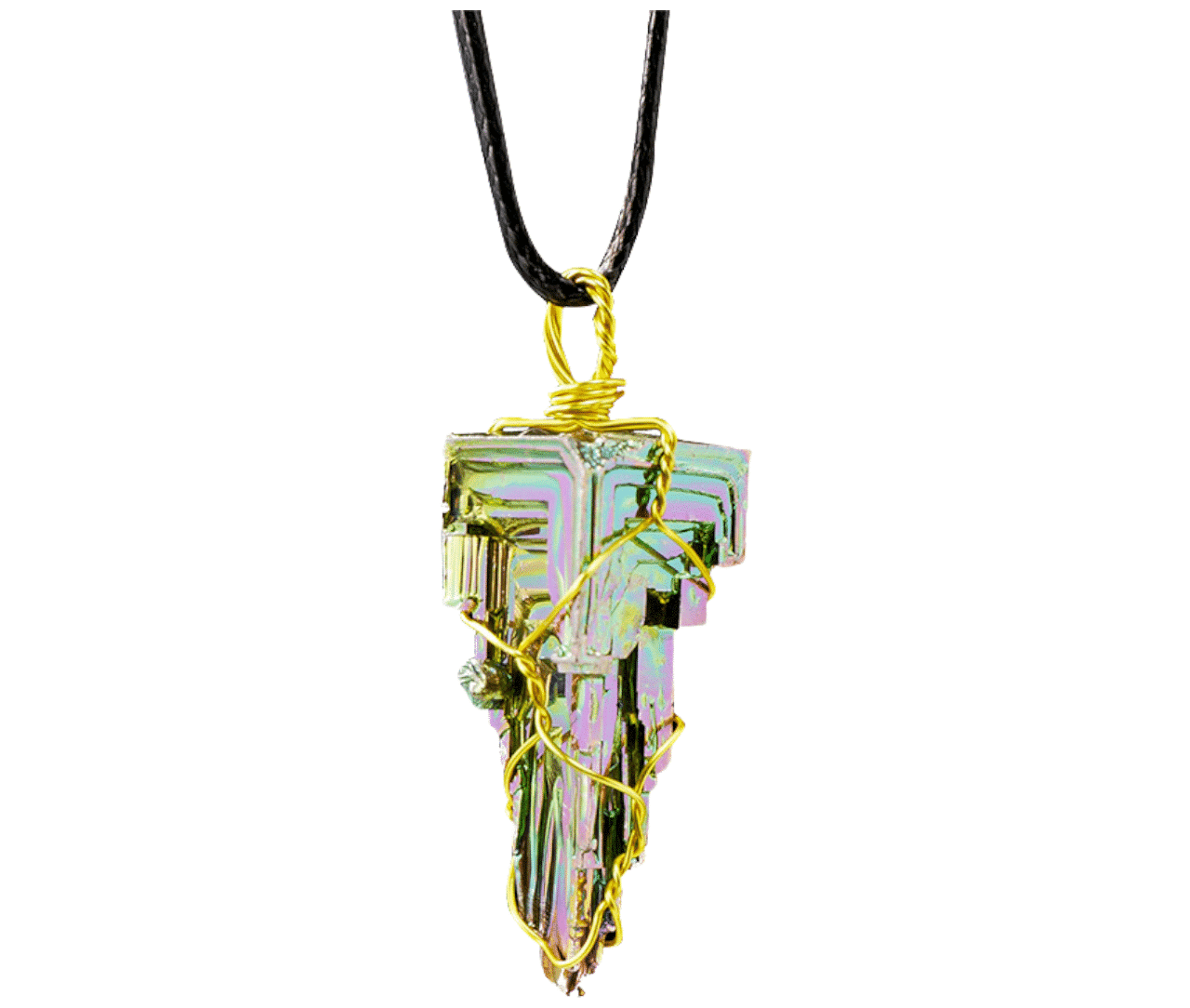
Description
Bismuth is a chemical element with the symbol Bi and atomic number 83. It is a red-white main group metal. In the past, bismuth was often confused with tin or lead because it shares many properties with them. In 1753, the French scientist Claude François Geoffroy succeeded in separating bismuth from lead. The name comes from the German "Wismut," which is probably a corruption of "white mass." Bismuth is widely used in the production of cosmetics and medicines. It also has other industrial applications: Bismanol (an alloy of manganese and bismuth) can be used to make strong permanent magnets. The low melting point of many bismuth alloys makes it suitable for use in fire alarms. It is therefore used in the Wood's metal alloy. Bismuth is used as a catalyst in the plastics industry. In nuclear installations, bismuth can be used as a carrier of 233U and 235U. Bismuth is used with a tin alloy for a coating on jet engine dovetail blades. Bismuth is used in soldering. Its expansion properties make it very suitable for this in some cases. Fireworks are sometimes enriched with bismuth to create beautiful color effects. This is done in a eutectic mixture with lead as a coolant in a lead-cooled reactor. Since the early 1990s, research has been conducted into the extent to which bismuth can be used as a non-toxic substitute for lead in various industrial processes, such as the shotgun pellets in a shotgun cartridge, which are already in use. Bismuth is a brittle heavy metal and the only one of its kind that is non-toxic. Furthermore, bismuth is the heaviest heavy metal and also the most diamagnetic. It has very low electrical conductivity and exhibits the highest Hall effect of all metals. Bismuth burns, forming a bright blue/green flame. Bismuth is one of the few substances that expands upon freezing; a property the metal shares with water and gallium.


