
Description
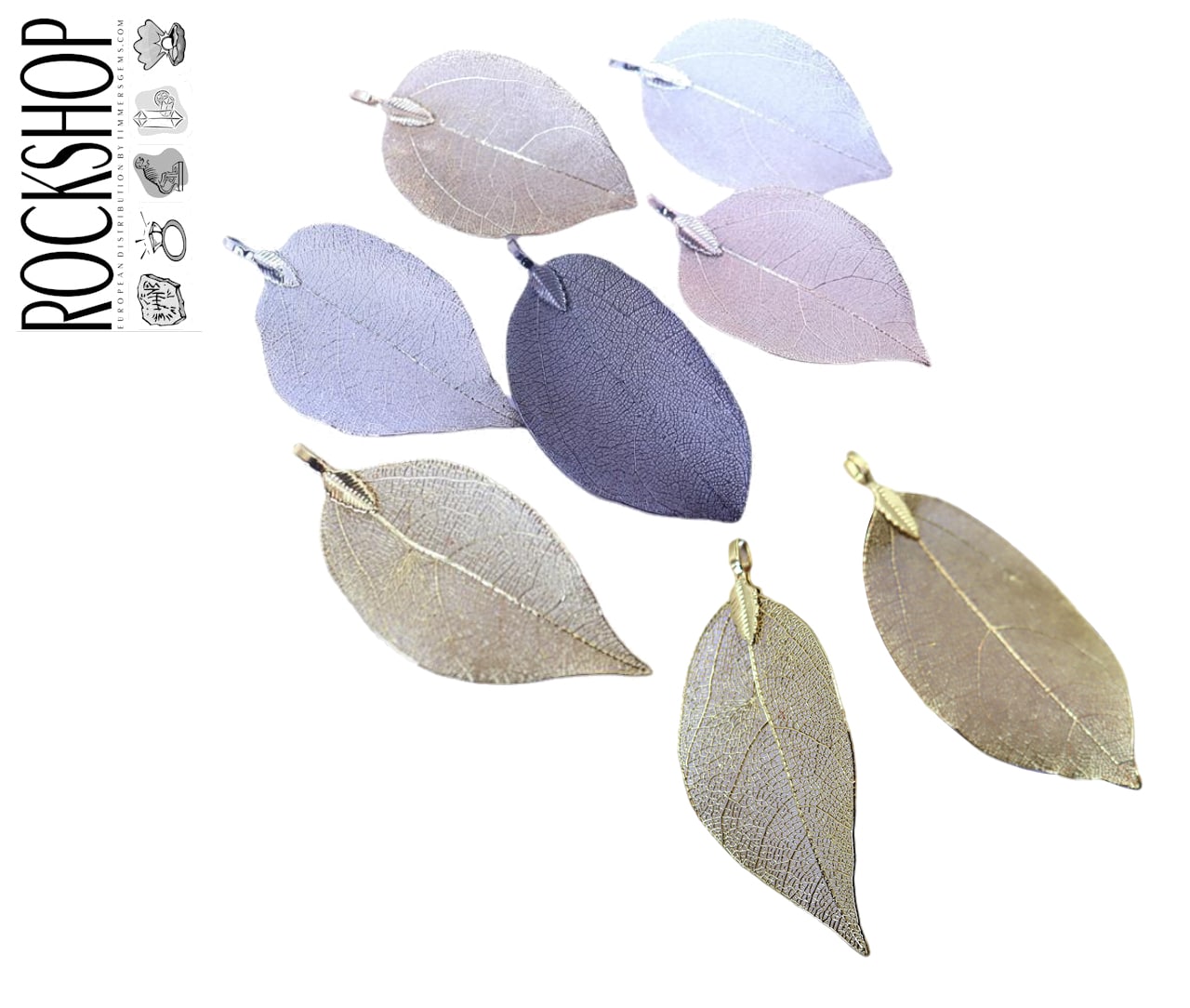
A hand-picked leaf is carefully preserved and dried for a period of time. The chlorophyll is removed, leaving a "skeleton" of the leaf. The leaf is then hand-painted with a conductive dye. Afterward, the leaf is coated with a precious metal such as silver or gold through a special process. Gilding is the process of covering an object with a layer of gold. Several ancient civilizations (Egyptians, Etruscans, Celts, etc.) already mastered the art of gilding. There are many different techniques for gilding. Inlaying gold leaf in mixtion is often used for picture frames, for example. For good adhesion and a high gloss, agate is usually burnished. Metals can be immersed in molten gold or galvanically gilded. The originally Korean technique of Keum Boo, in which relatively thick gold foil is fused to the surface of silver or steel objects, is gradually becoming more popular among Western goldsmiths and silversmiths. Fine gold powder in an oily dispersion can be applied to ceramics; during firing, the oil burns and the gold particles fuse. Instead of gold powder, gold salts are sometimes used, which are converted into pure gold through reduction in the kiln. Books can also be gilded: using brass stamps, letters and decorations of gold leaf are applied to the linen, leather, parchment, or paper of book covers under heat. In addition, gilding is sometimes applied to the edges of the book, or only to the top edge (the only edge visible in the bookcase). The latter variant is called "head gilding." Gilding behind glass has been practiced since antiquity. In his book Il Libro dell'Arte, Cennino Cennini describes how the technique was performed. He already speaks in his book about the unparalleled shine and brilliance of gold leaf behind glass. Nowadays, gilding behind glass is becoming less and less common due to a lack of knowledge. Only a few in the Netherlands still master the craft, in which gold leaf is elevated to a true work of art by means of animal glue or varnish.


