
Description
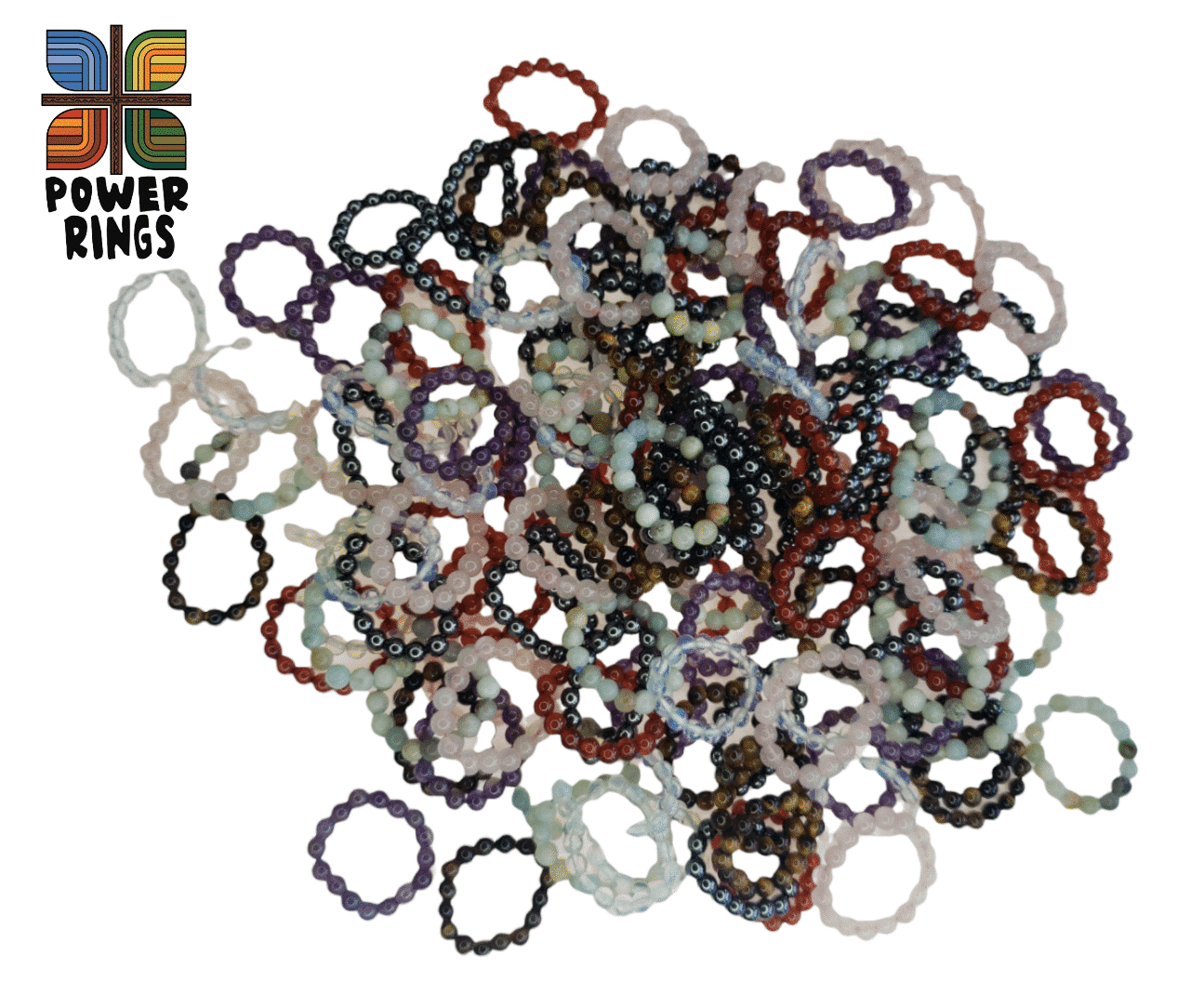
A power ring derives from a japa mala or mala and is literally a string of beads, prayer beads, in Hinduism, with a function similar to the rosary in Christianity. The japa mala usually consists of 108 beads, although other numbers divisible by 9 are also used. Malas are used to avoid losing count while reciting, chanting, or mentally repeating a mantra or the name of a deity. A Buddhist prayer bead (mālā, japamālā) is a prayer bead used in Buddhism. It has a function similar to the rosary in Christianity. The prayer beads are used to avoid losing count while reciting or chanting. A Buddhist prayer bead consists of 108 beads, each requiring a mantra to be prayed, and 4 beads or 1 bead representing the four heavenly kings. A Buddhist prayer bead is called a juzu in Japanese, fozhu or shuzhu in Standard Mandarin, and a badi in Burmese. A prayer bead is a string of beads used for reciting prayers. Well-known examples of such religious objects are the rosary in the Roman Catholic Church, the chotki/komboschkini in the Orthodox Church, the tasbih in Islam, and the japa mala in Hinduism. A mala is a prayer bead primarily used by people with a Buddhist background. Nowadays, more and more people in the West are buying a mala and using it as a prayer bead, wearing it as a necklace or bracelet, and now also as a powerful power ring.
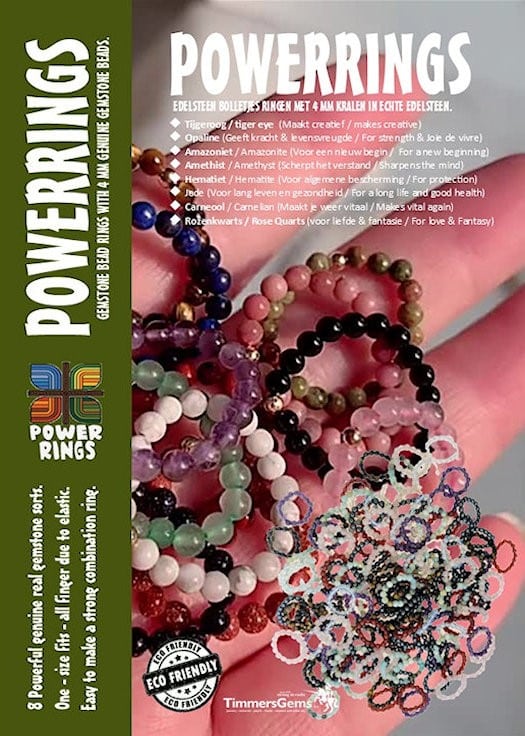
Opaline – For strength and joie de vivre.
Tiger’s Eye – Promotes creativity.
Amazonite – Clears the way for new beginnings.
Amethyst – Sharpens the mind and intelligence.
Hematite – For protection and a good mood.
Jade – For good health and a long life.
Rhodonite – Stone of love and good relationships.
Carnelian – Vitalizing stone.


