
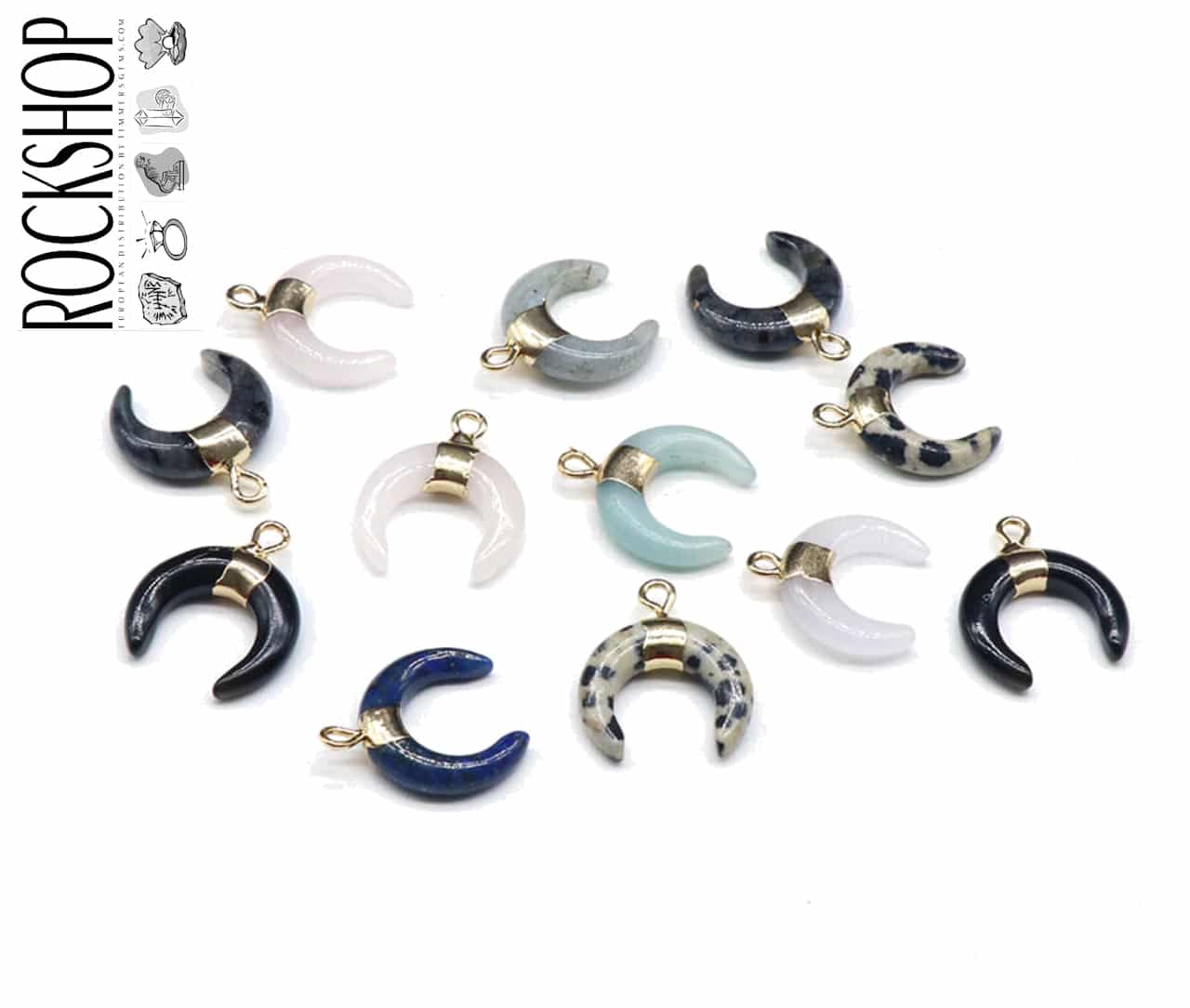
Description
An amulet, talisman, or fetish is an object believed to offer protection against danger, illness, and misfortune. A distinction sometimes made is that an amulet wards off negative forces, while a talisman harnesses positive forces and can even be used remotely. Commonly used amulets include: (gem)stones, coins, drawings, rings, religious objects (e.g., the Eye of Horus, Christian cross, Buddha statue), plants (e.g., the four-leaf clover; see also "deterrent herb"), and (parts of) animals. Even words like "amulet" are used; for example, the Latin "Vade retro, Satanas" or the Throne Verse. Although the term refers to a similar object, an amulet emphasizes protection and warding off danger. A talisman does the same, but derives from it, also a bringer of good luck in the eyes of its users. The Cyranides is an anonymous encyclopedia of amulets from the 1st century BC. Pliny the Elder describes amulets used for curing illness, relieving pain, or protecting against black magic in book 30 of his Naturalis Historia. In the 8th-century Indiculus superstitionum et paganiarum, the use of amulets was condemned. The choice of rock crystal as a drinking vessel or as part of medieval jewelry can be attributed to the belief that these crystals would shatter or discolor when they came into contact with poison. Thus, the chain became an amulet that protected the king.


