
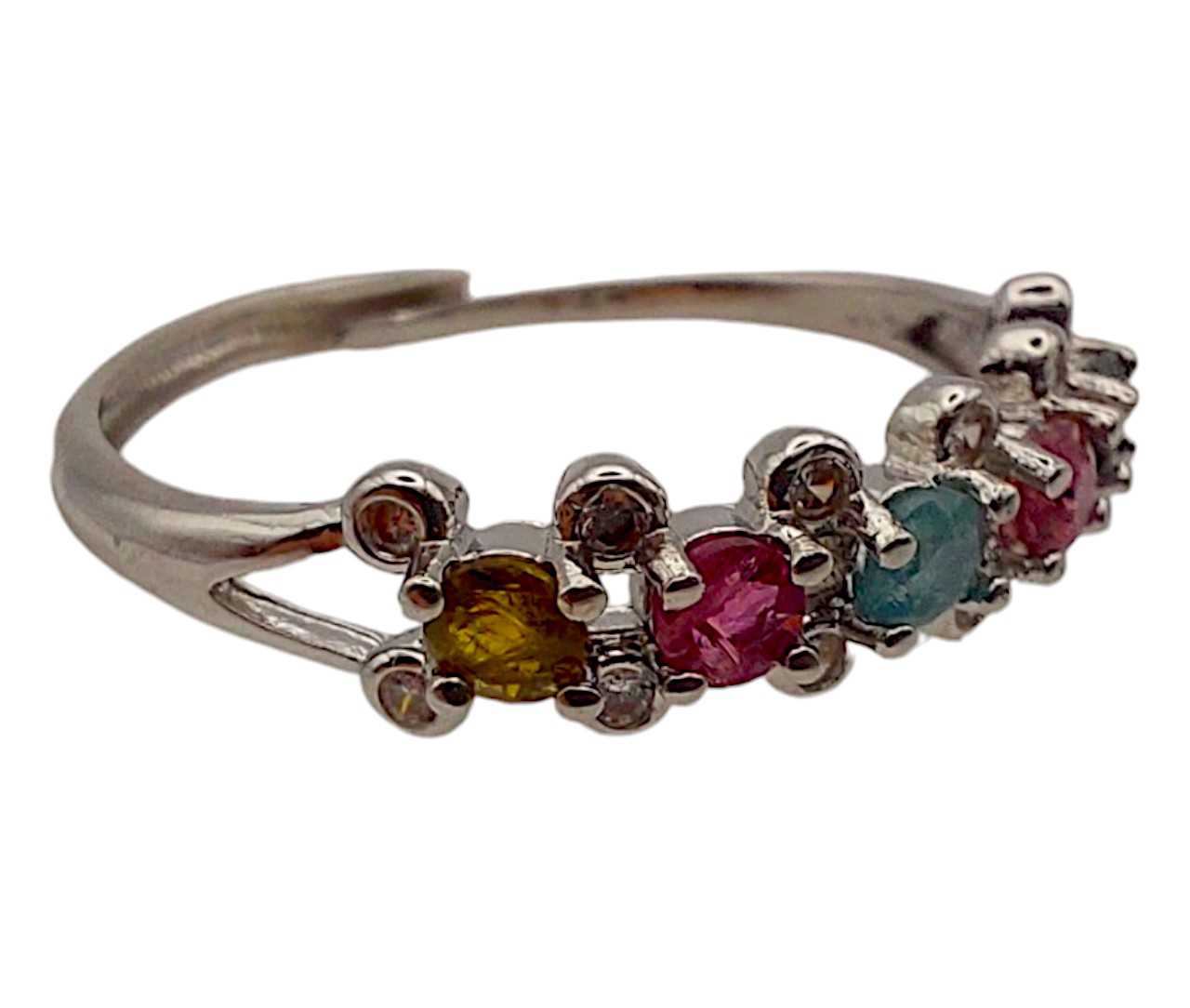
Description
Tourmaline (quartz) belongs to a group of minerals, all cyclosilicates. These minerals share a specific chemical formula: AX3Y6(BO3)3 Si6O18(O, OH, F)4. 'A' can be calcium or sodium, 'X' can contain aluminium, iron, lithium, or magnesium, and 'Y' is usually aluminium but can also be chromium or iron. Sometimes the 'A' position contains potassium, 'X' can contain manganese, and 'Y' can contain vanadium, although these elements rarely appear in tourmaline group formulas. Tourmaline is found in pegmatites, metamorphic rocks, igneous rocks, and alluvial deposits. Known in ancient times in the Mediterranean region, tourmaline was not introduced to Western Europe until 1703 from Sri Lanka by the Dutch. They called the new gemstone "Turmali", a Sinhalese word meaning "stone of mixed colours". Rubellites were traditionally used as gemstones and served as talisman for artists, who believed they would enhance their creative abilities. Tourmalines have unique properties; they are piezoelectric, meaning that when a crystal is heated or compressed, different electrical charges develop at both ends, creating an electrical potential. When an external electrical potential is applied to the crystal, it vibrates. The minerals are pleochroic, meaning the crystal appears darker when viewed along its longest axis than perpendicular to it. The four most common and well-known tourmaline minerals vary in color and transparency. Elbaite is transparent and a prized gemstone. Schorl, rich in iron, is the most common mineral in the tourmaline group and is black and opaque. It forms primarily in pegmatites, the very slowly cooling gangues of magma. The other two tourmalines commonly found are…


