
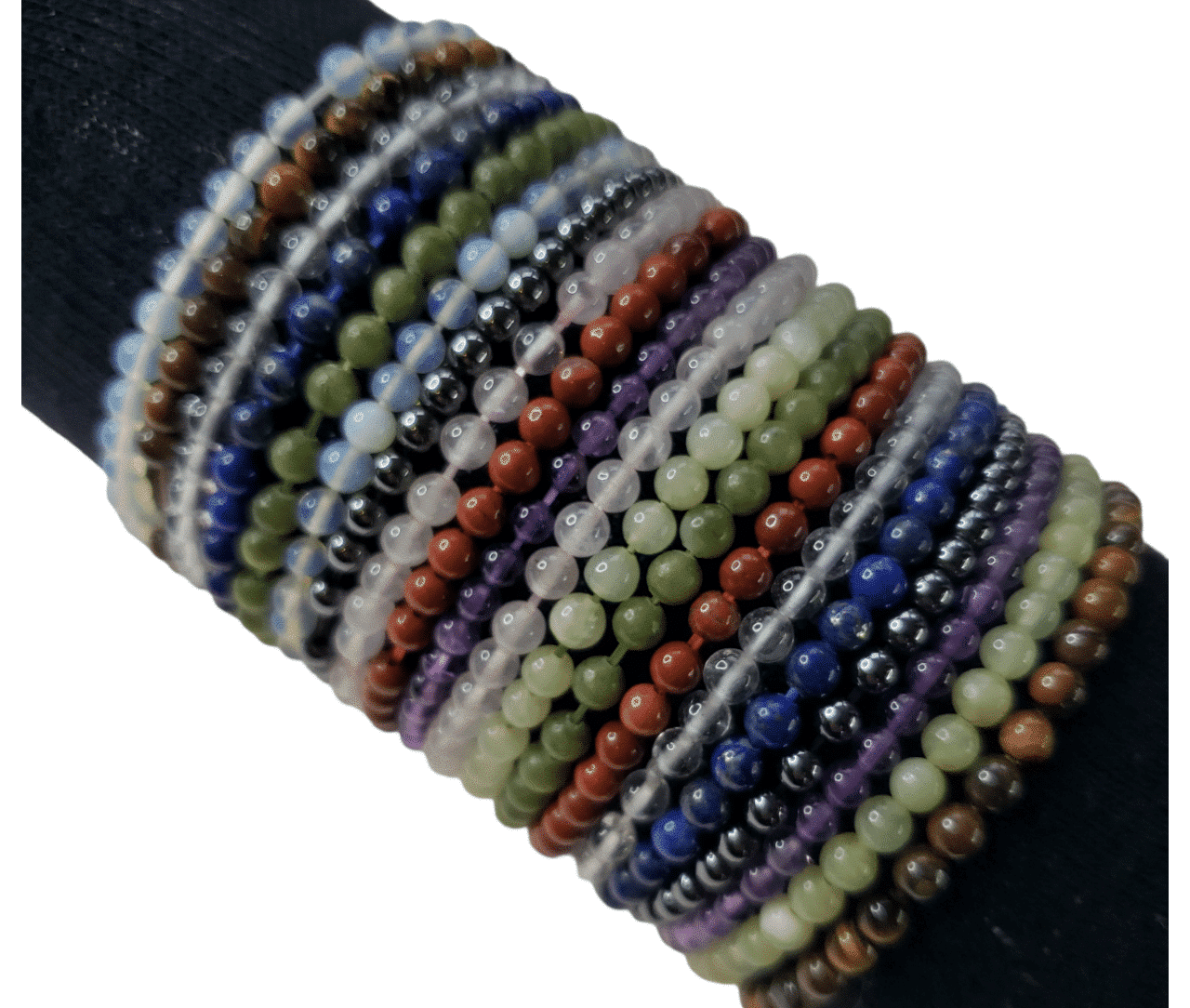
Description
A japa mala or mala, literally "garland," is a prayer bead in Hinduism, serving a function similar to the rosary in Christianity. The japa mala usually consists of 108 beads, although other numbers divisible by 9 are also used. Malas are used to avoid losing count while reciting, chanting, or mentally repeating a mantra or the name of a deity. A Buddhist prayer bead (mālā, japamālā) is a prayer bead used in Buddhism. It serves a function similar to the rosary in Christianity. Prayer beads are used to avoid losing count while reciting or chanting. A Buddhist prayer bead consists of 108 beads, each representing a mantra, and 4 beads or 1 bead representing the four heavenly kings. A Buddhist prayer bead is called a juzu in Japanese, fozhu or shuzhu in Standard Mandarin, and a badi in Burmese. A prayer bead is a string of beads used for reciting prayers. Well-known examples of such religious objects are the rosary in the Roman Catholic Church, the chotki/komboschkini in the Orthodox Church, the tasbih in Islam, and the japa mala in Hinduism. A mala is a prayer bead primarily used by people with a Buddhist background. Nowadays, more and more people in the West are buying a mala and using it as a prayer bead or wearing it as a necklace or bracelet.


