
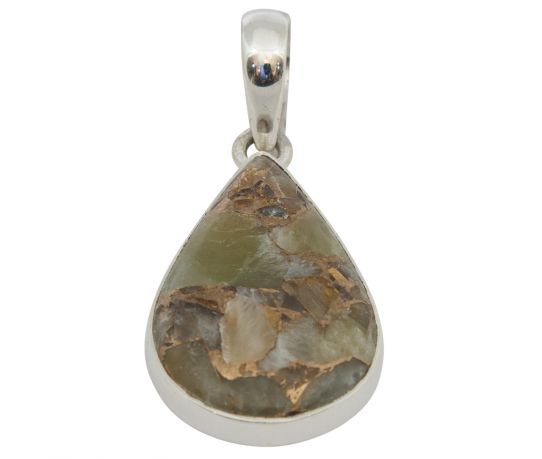
Description
Copper is a chemical element with the symbol Cu and atomic number 29. It is a red/yellow transition metal and in its unalloyed form is also known as copper. Excavations in northern what is now Iraq have shown that copper was used as early as 8700 BC.[1] Other excavations indicate that copper was being smelted and isolated from copper-bearing minerals such as malachite and azurite as early as 5000 BC. The Sumerians and Egyptians are known to have smelted copper and used it to make bronze around 3000 BC. The use of copper was also known in China, and very high-quality bronze objects dating back to 1200 BC have been found. The mummy of Ötzi, found in 1991 in the Austrian-Italian Alps, who is believed to have died around 3300 BC, carried tools made of 99.7% pure copper. In mythology and alchemy, copper was often associated with the deity Aphrodite because of its beautiful sheen. For this reason, copper was once used for mirrors, among other things. The name copper comes from the Latin word cuprum. This word is derived from "aes cyprium," meaning "ore of Cyprus." Copper was mined on Cyprus in ancient times. The main sources of copper are the minerals chalcopyrite, chalcocite, covellite, azurite, malachite, and bornite. These are found in abundance in the earth's crust. Major deposits of copper ore are Chile, Peru, and the United States. Approximately one-third of all copper is mined in Chile. Indonesia has seen the strongest growth in copper production over the past decade and was the fourth-largest producer in 2009. The main users of copper are China, Germany, and the United States. Global copper consumption in 2009 was 18.4 million tons. Mine production was 15.8 million tons, and recycling brought the total supply to 18.6 million tons. Demand is growing faster than supply, causing inventories to decline. On February 4, 2011, the price of copper reached a record high of $10,000 per tonne.[2] The same Financial Times article reported that demand will significantly exceed supply in 2011, leading to further price increases. Copper is traded on various international exchanges, including London, New York, and Shanghai.
Pure gold is a precious metal and is a dense but soft metal, slightly harder than zinc. Before it can be used, it must be refined, and for most purposes, it is alloyed with other materials to harden it. The purity of gold for jewelry is measured in carats; pure gold is 24 carats. Common purity levels in the Netherlands are 14 carat (58.3% gold), 18 carat (75%), and 22 carat (91.7%). A simple mnemonic is to approximate 1 carat as 4% pure gold. Gold has long been considered a valuable metal. Egyptian hieroglyphs from the 26th century BC already mention gold as a means of payment. Until about the mid-20th century AD, gold was still frequently used for coins. In ancient times, gold was not only known for its value but also possessed magical properties and served as a symbol of purity. Alchemists have long sought the philosopher's stone, a way to transform other materials into gold. Their failure to do so is easily explained by current understanding of atomic structure. In the 19th century, numerous gold deposits were discovered, particularly in the United States and Australia, leading to the gold rushes. Gold has been present on Earth since the planet's formation, but it wasn't formed on Earth because its production requires fusion reactions. Nuclear fusion reactions occur in the cores of stars, but these reactions don't provide enough energy to produce gold. Stars that are sufficiently massive (from about eight times the mass of the Sun) end their lives in a supernova explosion. During this explosion, heavy metals, including gold, are formed through nuclear reactions.
Gold diggers.
The mineral calcite (also called limespar) consists primarily of the salt calcium carbonate (CaCO3) and is one of the most common minerals in the Earth's crust. Calcium carbonate is formed when soluble calcium ions come into contact with CO2 (carbon dioxide forms a carbonate ion when a positive ion is present in a solution). Calcium carbonate is a poorly soluble salt, causing the resulting CaCO3 to precipitate; this occurs according to the following reaction: Ca2+(aq) + CO32-(aq) → CaCO3(s). Calcite is a common constituent of sedimentary rocks, veins, and deposits in hot springs and caverns in karst regions (as stalactites). It is the mineral that forms limestone and thus the most common mineral of biological origin. Calcite is the main constituent of limestone, chalk, and marble, and is also an important component of marl, calcareous sandstone, and chalk shales. Calcite causes chemical weathering in igneous and metamorphic rocks, creating sedimentary rocks. Calcite is soluble in CO2-containing water under slight pressure. As it falls through the air, rainwater absorbs the gaseous carbon dioxide, making it acidic. This acidic rainwater can dissolve lime. Underground currents can carry this material in solution until, upon contact with atmospheric pressure, CO2 escapes and the calcite precipitates. This is how stalagmites and stalactites are formed in caves. Historically, the transparent Icelandic form of calcite, called Icelandspar, was used to make Nicol prisms. Some researchers hypothesize that the Vikings navigated the sea using crystals of this mineral, which allowed them to accurately determine the position of the sun even in cloudy weather. Today, limestone is primarily used in construction as a building element, for the production of lime and cement, while marble is used as a building and ornamental stone.


