


Description
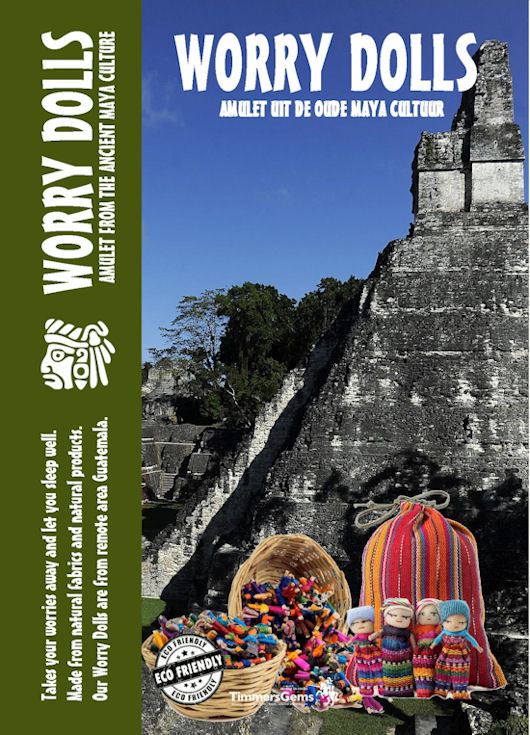
The Maya (Yucatec Maya: maaya'ob, Spanish: mayas) are a people in southern Mexico and northern Central America. The term is used as an umbrella term for 29 indigenous peoples from the same region, who share a common cultural and linguistic background. There are 8 to 9 million Maya, the vast majority living in Guatemala and southern Mexico (Yucatán, Quintana Roo, Campeche, Chiapas, and Tabasco), with smaller communities in Belize, Honduras, and El Salvador. Relatively large emigrant communities exist in the United States and northern Mexico. Many Maya struggle with the dilemma of seeking to benefit from the positive aspects of the modern world while simultaneously maintaining their own identity. Throughout the twentieth century, the Maya have been victims not only of marginalization and disenfranchisement, but also of persecution and mass murder. More than eighty percent of the 200,000 victims of the Guatemalan Civil War (1960-1996) were Mayans. In the 1980s, under presidents Romeo Lucas García and Efraín Ríos Montt, a full-blown genocide of the Mayan population took place in Guatemala. The Roman Catholic Church of Guatemala has extensively documented the often horrific crimes, which cost the life of a bishop of the archdiocese, Juan Gerardi. A Mayan activist campaigning against the persistence of disenfranchisement is Rigoberta Menchú (Nobel Peace Prize, 1992). Under international pressure, more rights have been granted to the large Mayan population in recent years. Bilingual education, in particular, has received international praise. In Mexico, tensions flared when the Zapatista National Liberation Army (EZLN) rebelled in Chiapas in 1994. Since the 1970s, many Maya have converted to Protestantism. Among the Maya in Guatemala and Chiapas, Protestants now outnumber Catholics. Evangelical Christianity and Pentecostal churches are particularly popular. This change is not uncontroversial. During the "violence" (the "violencia"), the work of North American Protestant missionaries was promoted by a murderous Guatemalan government, while progressive Roman Catholic priests were persecuted. Many old (community) traditions will disappear under the influence of anti-ritualistic Protestantism, although this has the advantage that Protestant Maya will no longer have to fulfill the often expensive communal duties and can thus achieve economic development in a Western sense.


