
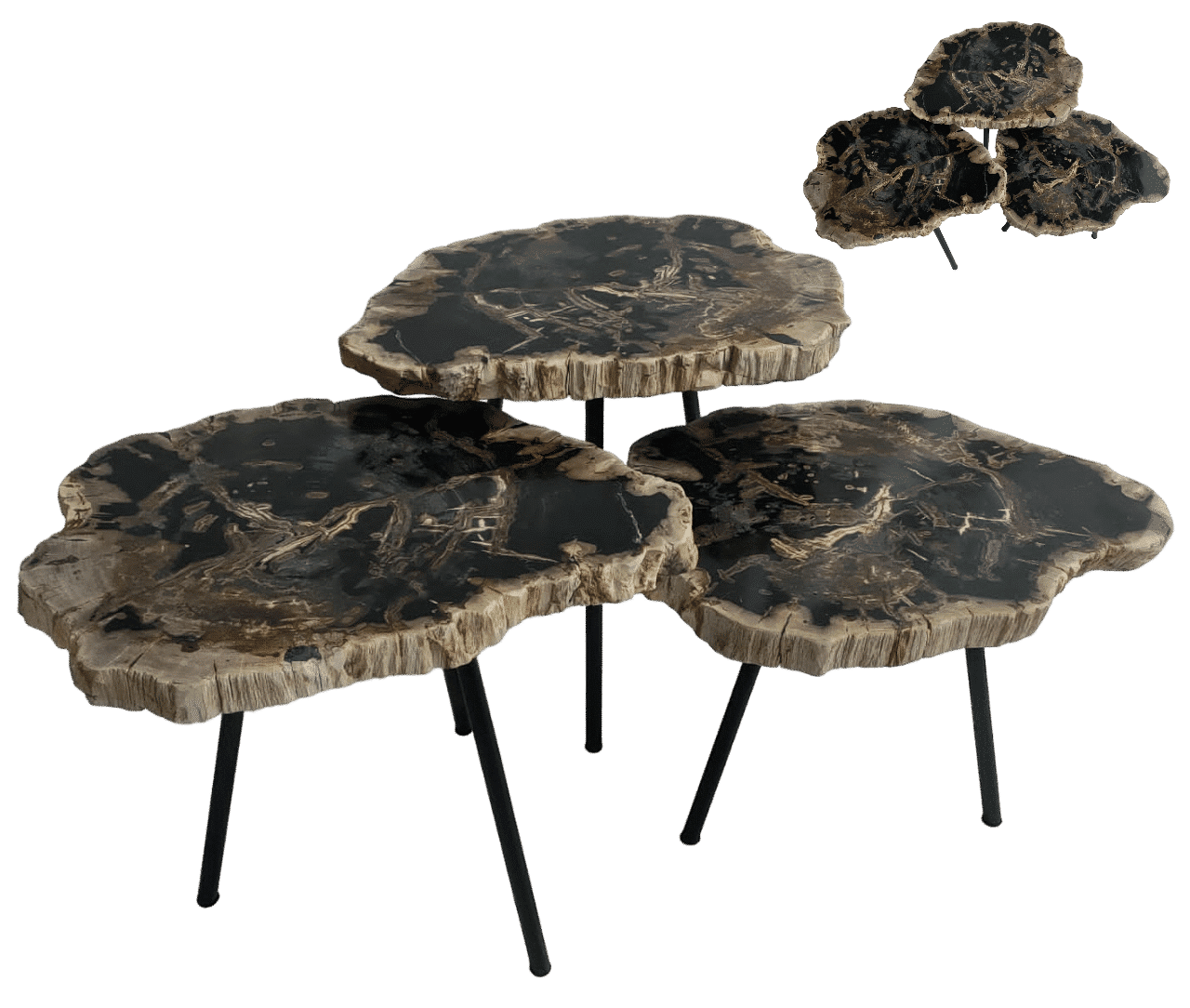
Description
Petrified wood, also known as petrified wood, is a type of fossil: it consists of fossilized wood in which all organic materials have been replaced by minerals (usually silicates, such as quartz), while retaining the wood's structure. The process of petrification occurs underground, when a tree is buried under sediment, and can take millions of years. Groundwater slowly seeping through the soil deposits minerals where the lignin and cellulose rot away. If the deposition and rotting occur at the same rate, the shape of the cells is preserved. The smallest details can be immortalized. Petrified annual rings and various tissues can be traced down to a microscopic level. Petrified wood has a hardness of 7 on the Mohs scale of hardness, the same as quartz. The petrification process has now been reduced to a few days in a laboratory. Petrified wood occurs in a wide spectrum of colors due to variations in the deposits of minerals such as manganese, iron, and copper. Quartz is colorless, but when iron is added, crystals with a red or yellow tinge are formed, as shown in the list below: Carbon – black Cobalt – green/blue Chromium – green/blue Copper – green/blue Iron oxides – red, brown, yellow Manganese – pink/orange Manganese oxides – black Silica – white, gray. Localities: Argentina: The Petrified Forest National Monument in Santa Cruz, Argentina is considered one of the world’s best-preserved petrified forests; many petrified trees in Patagonia have a diameter of over 3 meters and are over 30 meters tall. Belgium: The Goudberg geosite near Hoegaarden *Greece: The Petrified Forest at Sigri on the western tip of the island of Lesbos is probably the largest petrified forest, over 150 km². There are trunks up to 22 meters long. Large trees, complete with their roots, still stand upright. It has been a protected natural monument since 1985. *Kerguelen: Remains of petrified forests dating back ninety million years have been found on the French islands. *Namibia: The petrified trees near Khorixas were likely transported as logs by rivers from the north to Namibia. Some recognizable trunks are 30 meters long. *Austria: Remains of a petrified forest are located near Laas in the state of Carinthia. *Czech Republic: The largest stone is located in the Nová Paka museum village and is 8.20 meters long. *United States: The largest specimens in the country reach approximately 1.8 meters in diameter and are therefore significantly smaller than those in South America. A famous park is the Petrified Forest National Park in Arizona.


