
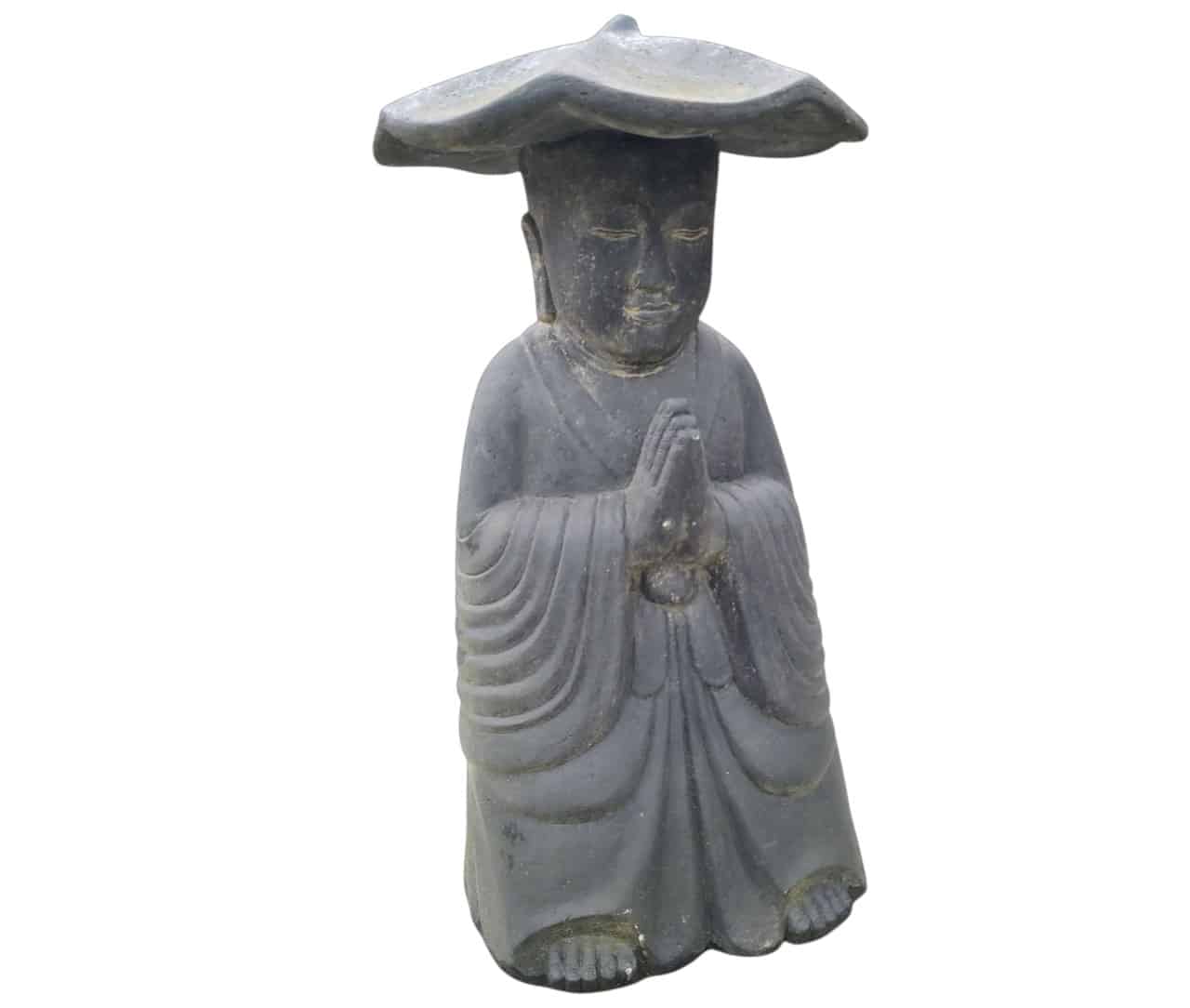
Description
Zen, or Chán, is a form of Buddhism that strongly emphasizes dhyana and introspection. This provides insight into one's true nature, opening the path to a liberated way of life. Chán is one of the larger Chinese schools of Mahayana Buddhism. In Japan and the West, the school is known as Zen (Japanese: 禅). According to tradition, Zen originated in India when the Buddha held up a flower and Kasyapa smiled. This signified his grasp of the essence of the dharma, which cannot be expressed in words. With this, the teachings were passed on to Kasyapa, the second patriarch of Zen. This legend overlooks the strong influence of Taoism on the development of Zen. Zen was strongly influenced by the meditation-oriented "teaching without words" of Laozi and Zhuangzi. For example, in his book "Masters of Zen," Thomas Hoover clearly indicates that Taoism and Buddhism are the two roots of Ch'an, later Zen: "The early Chinese teachers of meditation—dhyana in Sanskrit, Ch'an in Chinese—adopted the Taoist tradition of intuition, and the later Zen masters often used Taoist wisdom. Zen Buddhism, as it would develop first in China as Ch'an and later in Japan as Zen, was strongly influenced by Confucianism and especially by Taoism. Ray Grigg argues in his book "The Tao of Zen" (1994, 1999) that what is known as traditional Sino-Japanese Zen Buddhism was actually almost entirely based on Chinese Taoist philosophy, adapted with elements of Mahayana Buddhism.".


