
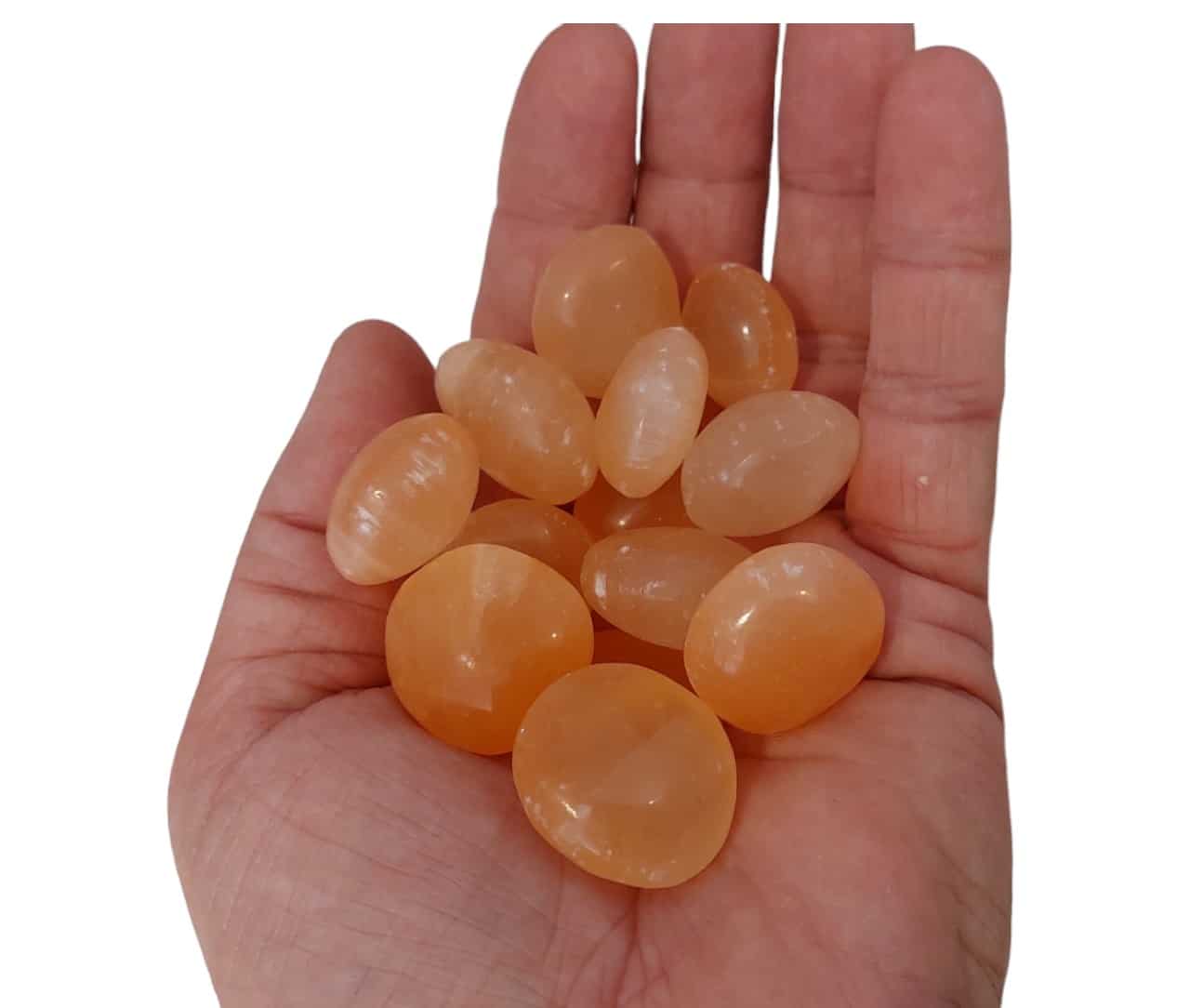
Description
Selenite, the stone with angelic vibrations, is becoming increasingly rare. Our fantastic Selenite products from Morocco are of immense beauty and are valued by many. Yet, our Selenite is not expensive, especially when compared to its quality. The name selenite refers to larger, translucent gypsum crystals (CaSO4 · 2 H2O). Selenite is formed, among other things, by the oxidation of calcareous clay deposits. These deposits contain pyrite. The weathering (oxidation) of pyrite releases sulfate ions (SO42-). This oxidation also acidifies the clay, causing the lime to dissolve (lime dissolves in acidic environments). This releases Ca2+ ions (calcium), which then react with the sulfates to form gypsum. Selenite is sometimes confused with rock crystal (SiO2) because they are very similar in appearance. However, they are easily distinguished because the surface of Selenite can be scratched with a fingernail. This isn't possible with rock crystal because that mineral is much harder. The name Selenite comes from Selene, the Greek goddess of the moon.


