
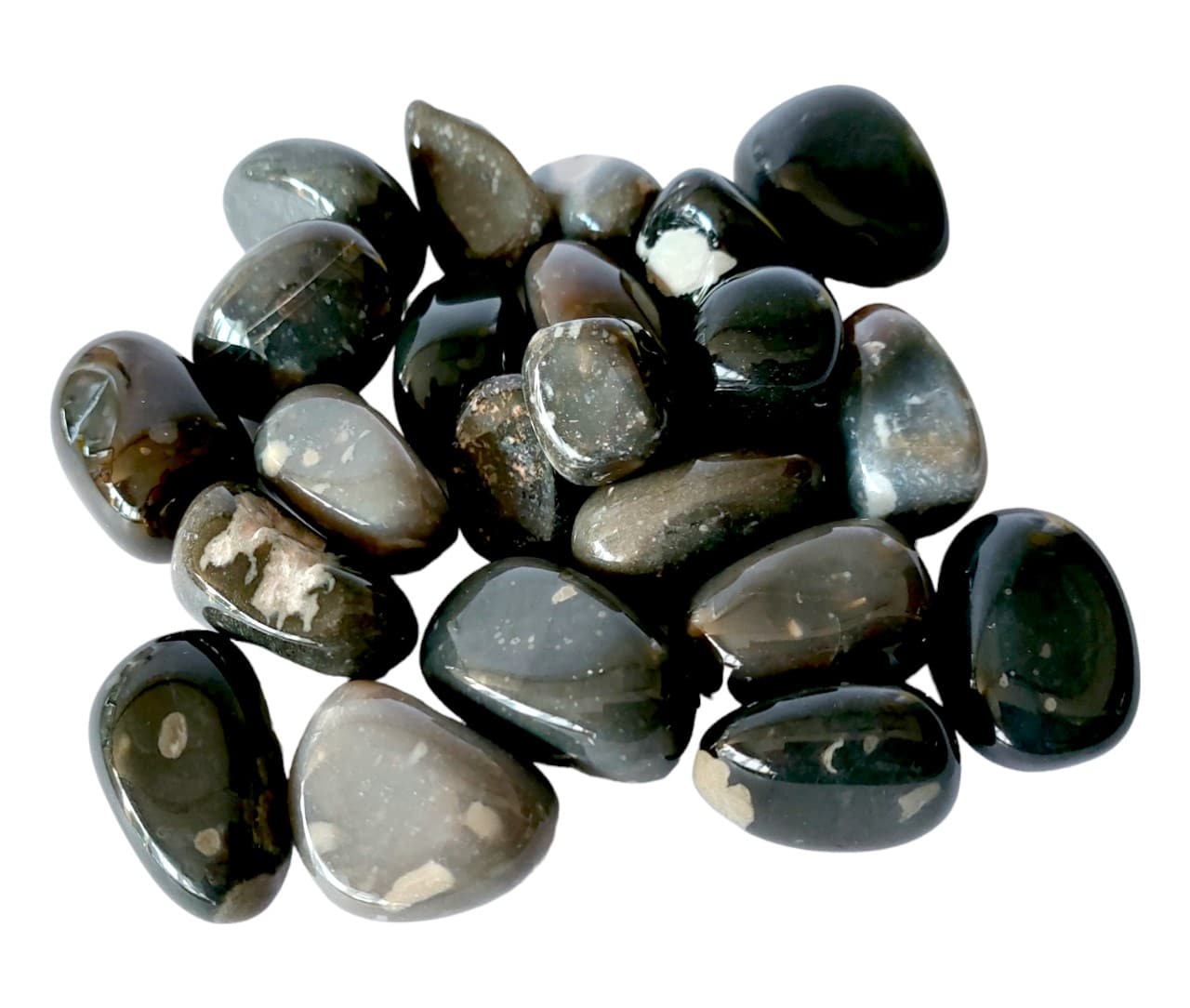
Description
Flint, or cobblestone, silex, or flint ("paper-thin") is a rock often found in lumps within limestone and is usually brown or gray in color. Such lumps are called concretions in geology. The flint concretions, deposited during the Late Cretaceous period, are highly diverse and range from elongated plates to antler- and bone-shaped stones. Flint consists of cryptocrystalline silica and abundant (chemically bound) water. It is a very hard (7 on the Mohs Scale of Hardness) clastic rock primarily found in the infilled burrows of crustaceans. A hard impact on a piece of flint often creates a shell-shaped fracture surface with sharp edges. This is caused by a stress wave in the rock caused by the impact. The rock is called flint because striking a piece of flint on a piece of iron or pyrite can produce sparks, which, with experience, can ignite a dry, flammable material (such as a tuft of loose cotton, dried moss, or tinder fungus). The sparks are created by small iron particles that spontaneously oxidize in the air, releasing a great deal of heat, causing the particles to glow. In prehistoric times (the Stone Age), people like Neanderthals and Cro-Magnons made stone implements, such as scrapers, arrowheads, axes, and blades, preferably from this material. The degree of refinement of the product and the techniques used can be used to estimate the object's age fairly accurately. Because such implements, unlike human and animal tissue, wood, and textiles, do not decay, they are, besides worked or unworked bones and pottery shards, virtually the only traces we have of prehistoric humans.


