
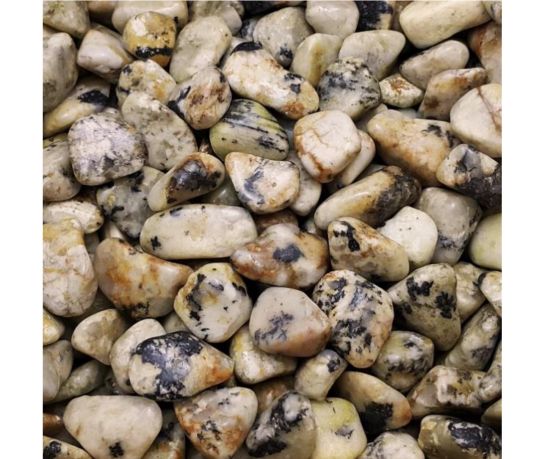
Description
The mineral cassiterite is a tin oxide with the chemical formula SnO2. Colorless, gray, green, or brownish- to brownish-black, cassiterite has an adamantine luster, a brownish-white streak color, perfect cleavage along the crystal plane [100], and an indistinct cleavage along the [110] plane. Its average density is 6.9, and its hardness is 6 to 7. The crystal system is tetragonal, and the mineral is not radioactive. The name of the mineral cassiterite is derived from the Greek word kassiteros, meaning "tin." Cassiterite is the most common tin oxide and occurs primarily in granitic pegmatites and alluvial deposits. The type locality is located in Cornwall and Wales in the United Kingdom. Cassiterite also occurs in eastern Congo (along with gold, copper, and coltan) and in much of Malaya (Malaysia). The Phoenicians obtained it from the legendary Cassiterides, an archipelago that may have referred to the Isles of Scilly, west of Cornwall. The Phoenicians traded this mineral throughout the Mediterranean.
Cassiterite


