
Description
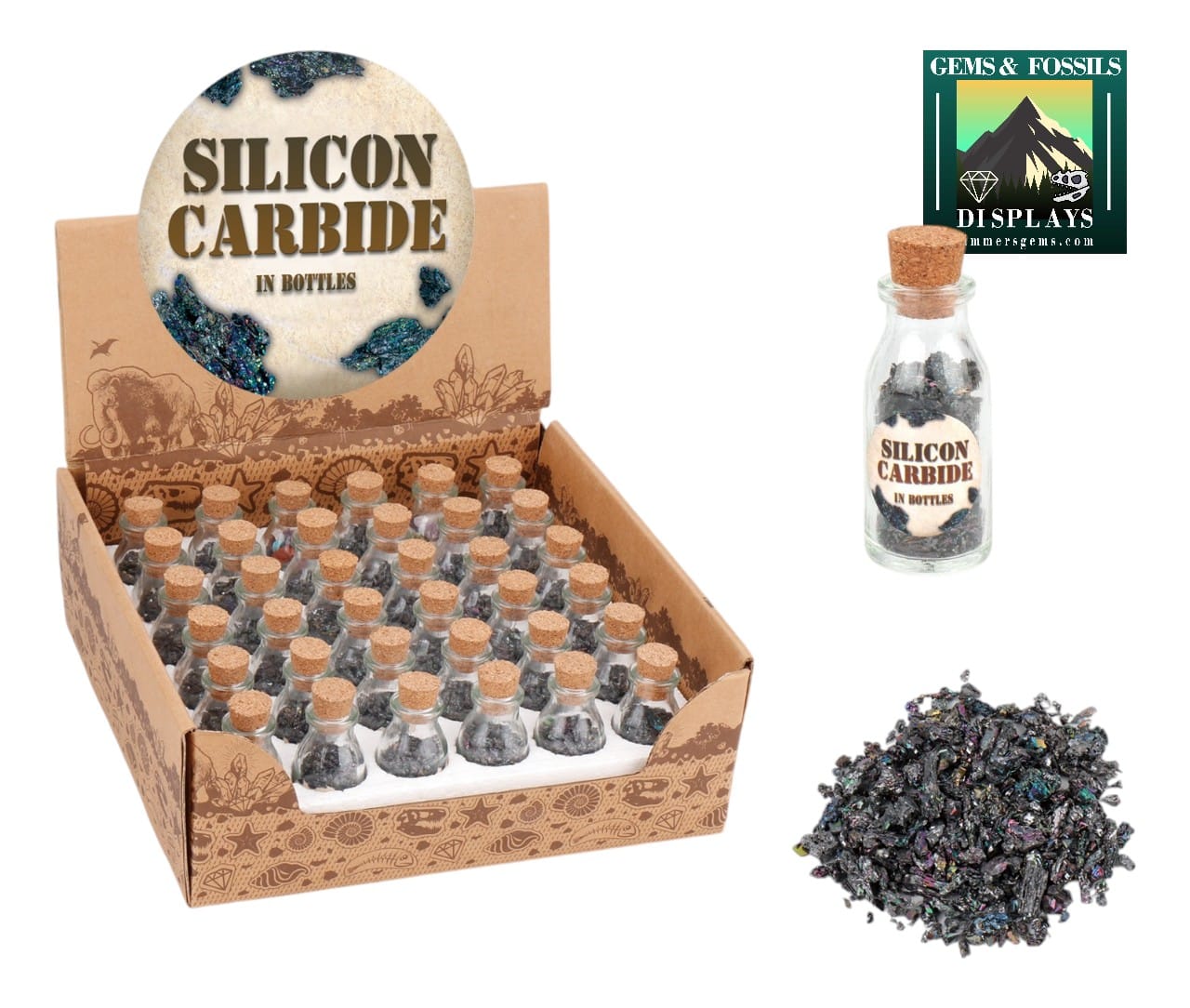
Silicon carbide (SiC), also known as carborundum, is an extremely hard material widely used for grinding and polishing, in the form of grinding wheels, polishing and grinding powders, and as a sandpaper coating, and nowadays also for armor plating on armored vehicles. The compound was discovered by Edward Goodrich Acheson, who obtained a patent for it on February 28, 1893. Granular silicon carbide is produced commercially through a very high-temperature reaction. High-quality silica sand and carbon (usually petroleum coke) are mixed in the correct proportions to the reaction material. A pile of material is built from this mixture. At the center of this pile of material is a graphite core that serves as an electrical conductor. The graphite core is connected to a transformer and energized. Due to the resistance, the temperature in the core of the pile of material (furnace) rises to approximately 2700 degrees Celsius. At this temperature, the reaction SiO2 (sand) + 3C (coke) yields SiC + 2CO (carbon monoxide); in short: SiO2 + 3C → SiC + 2CO A clear distinction must be made between granular silicon carbide and fibrous silicon carbide, which is produced on a nanoscale for specific purposes. Granular silicon carbide has been shown to be toxically inert. Granular silicon carbide, as produced in the Netherlands, is not classified as a hazardous substance or preparation according to EC Directive 67/548/EEC or Directive 1999/45/EC or Regulation (EC) No 1272/2008. In a report published on December 7, 2012, the Dutch Health Council stated that silicon carbide in fiber form (fibers, "whiskers") can cause cancer and should be classified as "carcinogenic to humans" (category 1A), according to the Health Council's classification system. Data on the granular form of silicon carbide are insufficient to classify its carcinogenic properties (category 3). The reason is that the committee is concerned about whether commercial granular silicon carbide is sufficiently free of fiber-form silicon carbide


