
Description
Sphalerite skull from the Shuikoushan region
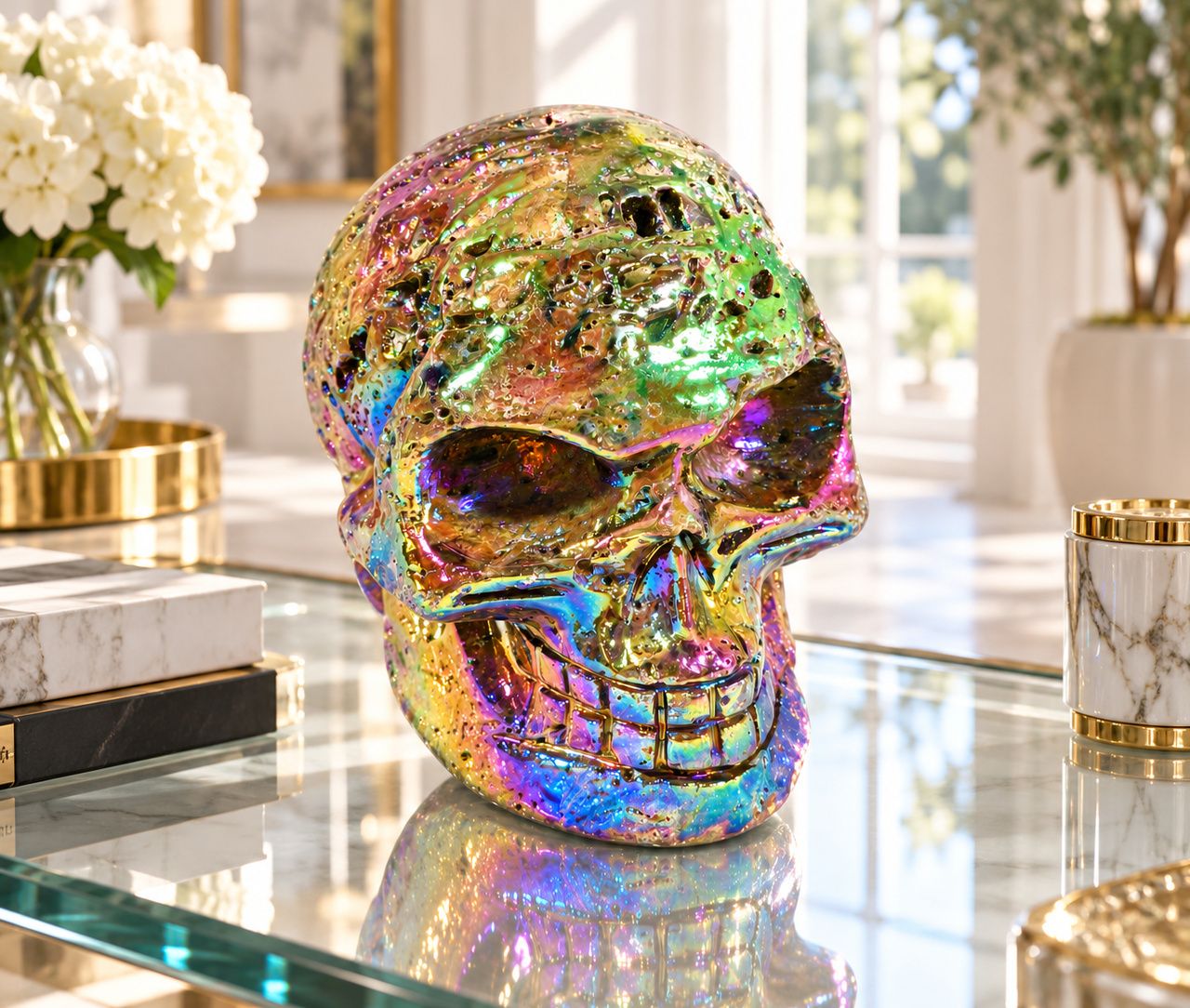
These exceptional polished sphalerite skulls from the Shuikoushan region in Hunan, China, combine the natural structure of the mineral with striking and detailed carving. The skulls measure approximately 80 to 110 mm and, in addition to cream, grey, and brown tones, sometimes display beautiful blue to blue-green reflections . This color phenomenon can visually evoke the well-known play of colors of labradorite and is therefore sometimes described as a “labradorite effect,” although mineralogically it is not true labradorescence.
Sphalerite from Shuikoushan in China
The Shuikoushan area in Hunan is a well-known Chinese mining region where zinc and lead minerals, among others, occur. Sphalerite is an important zinc-containing mineral and, together with various accompanying minerals, can form complex structures, color zones, and crystalline patterns here. It is precisely this variation that makes the material particularly suitable for decorative carvings, giving each skull a completely unique appearance.
Detailed polished skull
The stone is carefully shaped into a recognizable skull, with the eye sockets, nose, jaw, and teeth clearly defined. Grinding and polishing create a smooth surface on which the mineral's natural pattern remains clearly visible, while deeper recesses provide extra contrast and a powerful three-dimensional appearance.
Size from 80 to 110 mm
Measuring approximately 80 to 110 mm, these skulls are a nice medium size. They are large enough to clearly view the various details and natural mineral structures, yet compact enough for a display cabinet, desk, sideboard, or mineral display.
Sometimes with blue reflections
A number of specimens display blue, blue-green, or iridescent zones. When the skull is rotated or viewed from a different angle, these spots may become more pronounced or, conversely, more subtle. Consequently, specimens with such a distinct color phenomenon have an extra striking appearance.
Labradorite effect as a visual description
The term labradorite effect is used to describe the visual resemblance to the blue play of color of labradorite. In real labradorite, this effect is caused by labradorescence, whereas the reflections in these sphalerite carvings have a different mineralogical origin. For an accurate product description, we therefore prefer to speak of a labradorite-like light effect.
Natural mineral with a complex structure
Sphalerite consists primarily of zinc sulfide (ZnS) and can vary greatly in appearance depending on composition, inclusions, and accompanying minerals. In these carvings, light and dark areas, fine veins, crystalline zones, and natural openings can come together, causing the skull to reveal ever-new details when viewed up close.
Symbolism of the skull
In various cultures and modern symbolism, the skull is associated with transience, transformation, knowledge, and the consciousness of life. For collectors, a mineral skull also holds primarily decorative and artistic value, where the natural stone forms a powerful contrast with the recognizable anatomical shape.
Traditional meaning of sphalerite
Within modern gemstone and mineral traditions, sphalerite is sometimes associated with grounding, concentration, vitality, and balance. These spiritual meanings are based on personal beliefs and traditions and have not been scientifically proven to have medical effects.
Nice for display cabinet and collection
Due to its compact size and striking carving, a sphalerite skull is easy to combine with other minerals, fossils, and gemstone objects. Especially under focused lighting, the polished surface, natural structure, and any blue reflections stand out particularly beautifully.
Each copy is unique
No two sphalerite skulls are completely identical, as color, inclusions, mineral structure, and any bruising differ from one to another. The exact pattern around the eye sockets, forehead, and jaw is also determined by the natural stone, giving each specimen its own unique character.
Special for collectors
These skulls appeal to both gemstone carving enthusiasts and mineral collectors looking for something other than a standard polished point or sphere. The combination of the Shuikoushan material, the skull shape, and the sometimes present bluish light effect makes each specimen a striking collector's item.
Features
- Product: ground sphalerite skull
- Mineral: sphalerite with natural accompanying minerals
- Origin: Shuikoushan region, Hunan, China
- Chemical composition of Sphalerite: primarily zinc sulfide, ZnS
- Size: approximately 80 to 110 mm
- Shape: detailed skull
- Finish: ground and polished
- Colors: cream, gray, brown and dark natural mineral zones
- Special effect: sometimes blue to blue-green reflections
- Lighting effect: visually labradorite-like, not true labradorescence
- Use: display cabinet, desk, mineral collection, or decoration
- Symbolism: transformation, transience and consciousness
- Unique character: every skull differs in color, structure, and reflection
buy sphalerite skull
If you are looking for a special sphalerite skull from the Shuikoushan region in China, these carvings of approximately 80 to 110 mm a striking choice. The natural mineral structures, careful polishing, and sometimes present blue reflections with a labradorite-like effect make each skull a unique object for a mineral collection, display case, or special interior presentation.


