
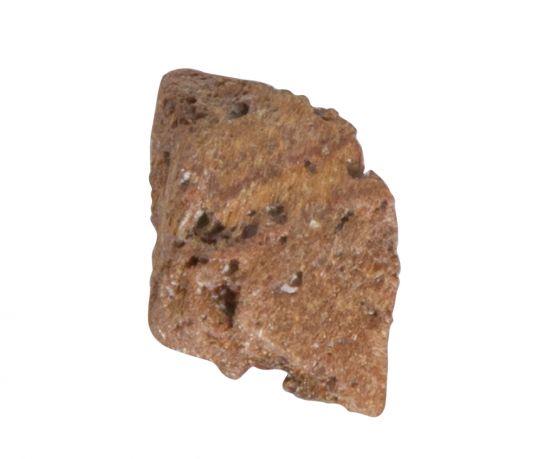
Description
The mineral anatase is one of the three polymorphs of titanium dioxide (TiO2). The other polymorphs are brookite and rutile. It has a tetragonal crystal structure and is primarily used in solar cells, lithium-ion batteries, electrochromic windows, and sensors. It is a semiconductor with a band gap of 3.2 eV. Anatase, formerly known as octahedrite, has the same chemical properties as rutile and crystallizes in the same system, but it has a lower density (3.90), is yellowish, brown, or black in color, and has a distinct pyramidal or bipyramidal crystalline form. The luster is metallic or lustrous in the translucent variety. Like rutile, anatase is primarily found in metamorphic rocks in the Alps, the Dauphiné region of France, and the Binna Valley and St. Gotthard in Switzerland. In the United States, it is found near Somerville (Massachusetts) and Magnet Cove (Arkansas). In the sedimentary petrological study of Dutch Quaternary river sands, anatase is classified as a heavy mineral. These are minerals with a density greater than 2.86. In this study, anatase belongs to the group of stable minerals and is characteristic of deposits from the Meuse River, among other places.


