
Description
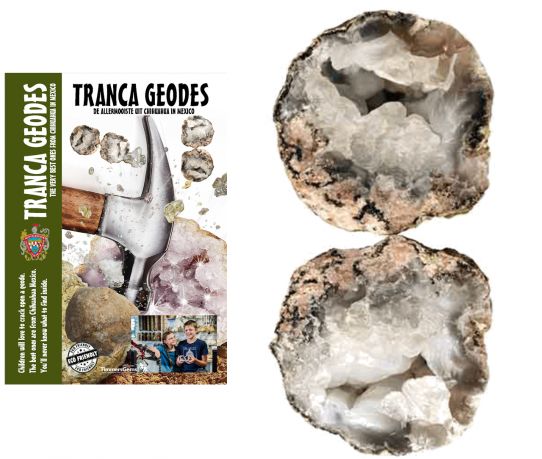
A geode, or druse, is a hollow or partially hollow, globe-shaped nodule covered with crystals on the inside. Geodes typically range in size from 2.5 to 30 centimeters, but this can vary considerably. They are found in sedimentary rocks and are sometimes very valuable. A geode consists of a thin but dense outer layer of silicates, usually filled with a layer of quartz crystals such as amethyst or smoky quartz, but rutile or calcite can also be present. Some specimens have water-containing cavities. They are thought to have formed as "bubbles" in the liquid magma that rose in a vent pipe during an eruption. Just as bubbles collect under the film forming on top of boiling milk in boiling milk, gas bubbles remain trapped in the magma. These gas-filled cavities persist after the magma solidifies and fill with saturated mineral solutions. A geode forms as a layer of silica within a host chamber, usually a fossil cavity in the rock. The minerals in the water flowing along the hardened outer shell form crystals in the silica layer. Crystals then slowly grow in the cavities. Agate is formed in the same way. If geodes are weighed and their weights compared, the lightest can sometimes contain beautiful crystals. Geodes are sawn or broken in half with special pliers to expose the interior.
Opening Geodes


