
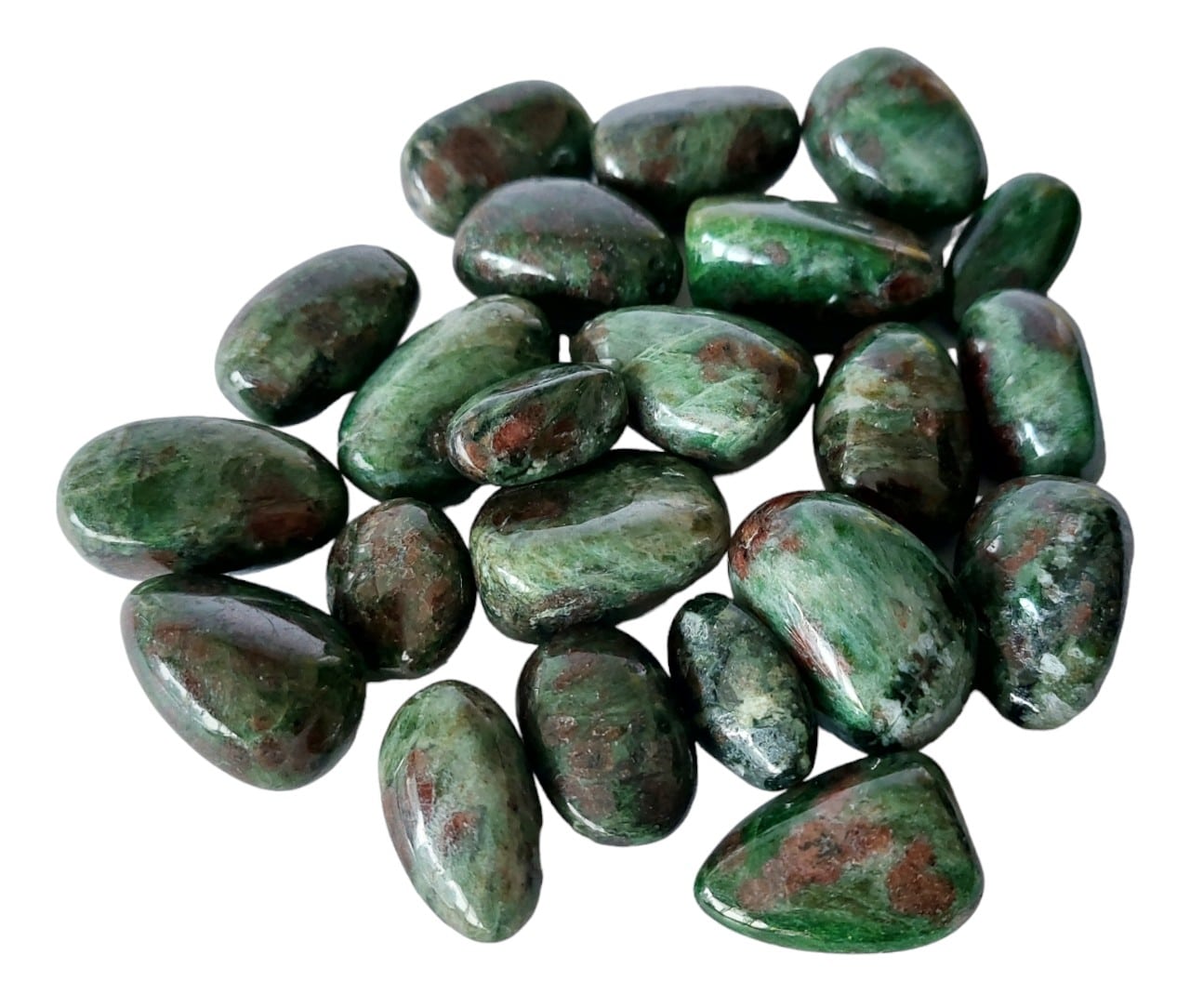
Description
Eclogite is mafic (basaltic) in chemical composition. It is sometimes classified as peridotite, but is not actually ultramafic. Eclogite is also sometimes classified as a mantle rock, which is incorrect because it is not originally mantle material. Because the eclogite facies occurs at higher-than-normal pressures in the crust, eclogite is rare and indicates special tectonic conditions. Unweathered, eclogite is a striking rock, with minerals ranging from red to purple garnets (almandine to pyrope) in a matrix of bright green clinopyroxene (omphacite). Although these two minerals are characteristic of eclogite, kyanite, rutile, quartz (sometimes as its high-pressure polymorph coesite), retrograde amphiboles such as glaucophane, retrograde titanite, phengite, and paragonite (white micas), zoisite, dolomite, and diamond can also occur. When many retrograde minerals are present, it is sometimes referred to as "retro-eclogite." Eclogite is the result of high-pressure metamorphism of rocks with a mafic composition (e.g., gabbro or basalt). The depth required to form eclogite in the Earth is normally only reached in the mantle. However, eclogite has a different chemical composition from ultramafic mantle rocks such as peridotite. Since the 1980s, eclogite has therefore usually been explained as chunks of crust that were subducted into the mantle and then returned to the surface. Exactly how this uplift occurs is still being researched. Eclogite xenoliths are sometimes found in kimberlite pipes. Eclogite lenses occur in granulite or amphibolite terrains worldwide. Examples include the Musgrave Block in Australia (formed during the Petermann Orogeny), where eclogite lenses occur in granulite terrains; the Caledonides in Norway and Greenland, where eclogite lenses occur together with peridotite lenses in felsic gneisses and amphibolites; and Alpine mountains such as those in Greece or the Alps. Eclogite lenses in these mountains usually occur in ophiolites. Eclogites containing glaucophane occur in the Italian Alps. The presence of eclogite always indicates a rare tectonic situation.


