
Description
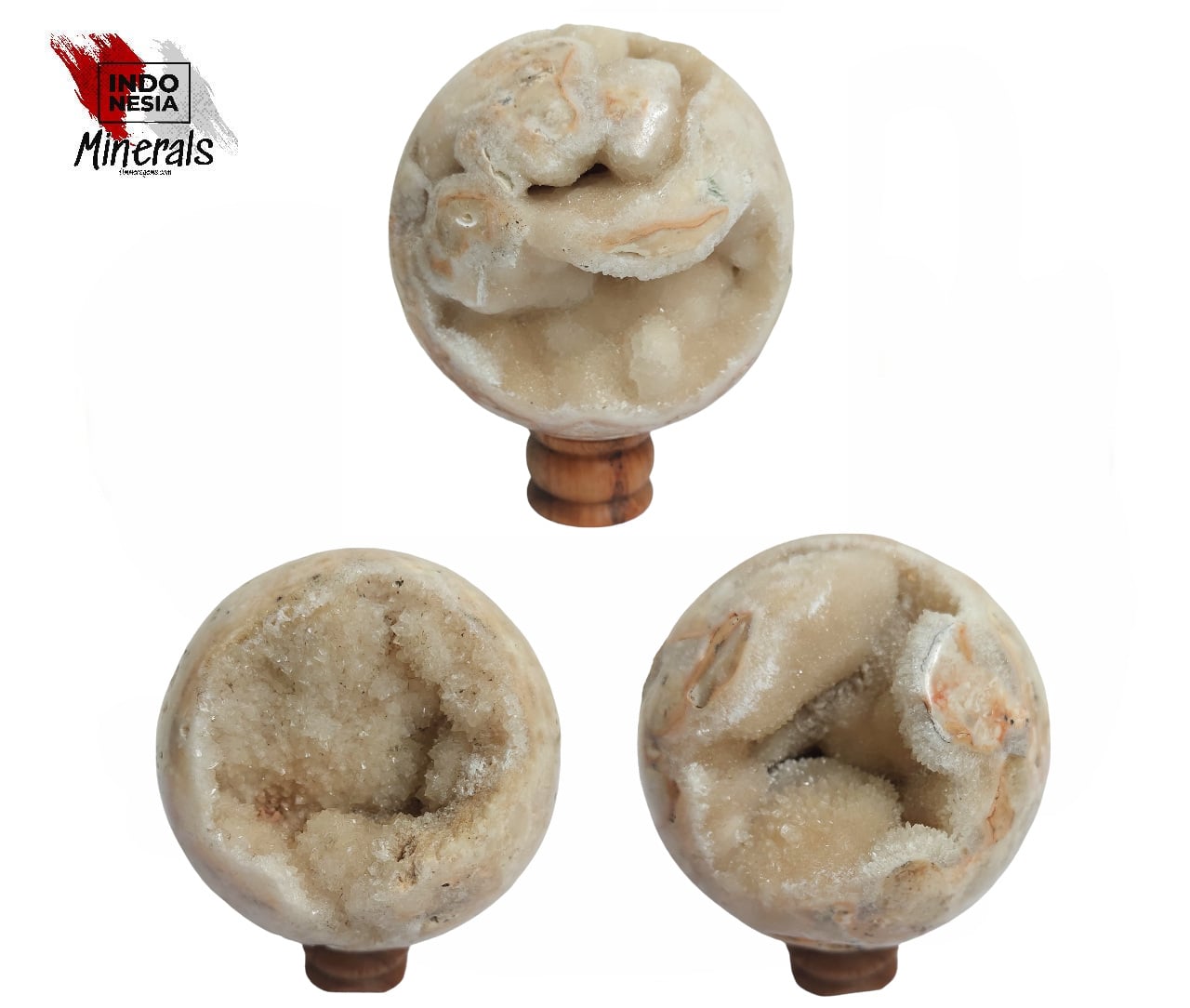
The word druse (also known as drusy or druzy) refers to a mass of small crystals ("crystal druse"). These crystal growths, or clusters, can be formed by many different minerals. The mineral types and shapes of crystals formed depend on the composition of the fluid. Crystal size is a function of fluid temperature and pressure. A druzy is a cluster of small mineral crystals that forms on the surface of another rock. There are many types of druzy, as there are many types of minerals. Each type of druzy has specific characteristics, such as crystal size, luster, and color. Quartz is one of the most common types of druzy due to the prevalence of silica worldwide. Regardless of the mineral that forms the druzy, the overall appearance usually resembles that of sugar. The small crystals are considered beautiful because, like large gemstones, they sparkle and catch light rays. Calcite is soluble in CO2-containing water under slight pressure. As it falls into the air, rainwater absorbs carbon dioxide gas, making it acidic. This acidic rainwater is capable of dissolving limestone. Underground currents can transport this material in solution until, upon contact with atmospheric pressure, CO2 escapes and the calcite precipitates. This is how stalagmites and stalactites are formed in caves. Historically, the transparent Icelandic form of calcite, called Icelandspar, was used to make Nicol prisms. Some researchers hypothesize that Vikings navigated the seas using crystals of this mineral, which allowed them to accurately determine the position of the sun even in cloudy weather. Today, limestone is primarily used in construction as a building element, for the production of lime and cement, while marble is used as a building and decorative stone.


