
Description
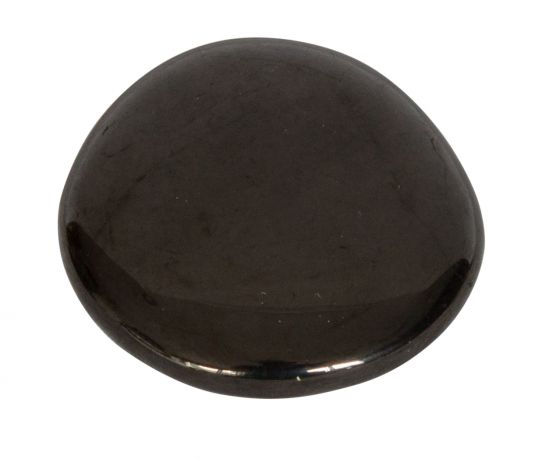
Git (gagate) is an organic amorphous mineral. It is a mineraloid, not a mineral. Git has a black or dark brown color and sometimes contains pyrite inclusions, giving it a copper color or metallic sheen. The name comes from the Greek "lithos gagatès," meaning stone from Gagas. Gagas was a place and a river in ancient Greek Lycia, Asia Minor. Via the Old French "jaiet," the name was further corrupted to "git." The Dutch scientific name is gagaat. Git is a fossil with a density of 1.23 kg/dm³ that formed under high pressure in mud during the Jurassic period from 135-million-year-old wood of the Araucariaceae tree family. It is found in two forms, hard and soft, with a hardness of 4 and 3 on the Mohs scale of hardness, respectively. The hard form results from carbon compression in salt water, while carbon compression in fresh water produces the soft form. Git is easy to polish and is used for jewelry and artifacts. Its low density allows for the creation of large, but not too heavy, pieces. Git beads have already been found in the Neolithic dolmens in Drenthe. Bede writes in his Historia ecclesiastica gentis Anglorum in 731 that: "Britain produces abundant and excellent Git, a black gemstone that glows in fire; when set on fire it repels snakes, and when warmed by rubbing, anything touched adheres to it, just as amber does." After the death of Prince Albert in 1861, his widow, Queen Victoria, wore mourning black (except on ceremonial occasions). By wearing Whitby Git jewelry with her mourning attire, she popularized this semi-precious stone among the upper classes in the 19th century. During the roaring twenties, young women in the United States became fashionable in wearing long necklaces. These necklaces consisted of multiple strands of jet beads, extending from the neck to below the waist. Jet is traditionally used for monks' rosaries.


