
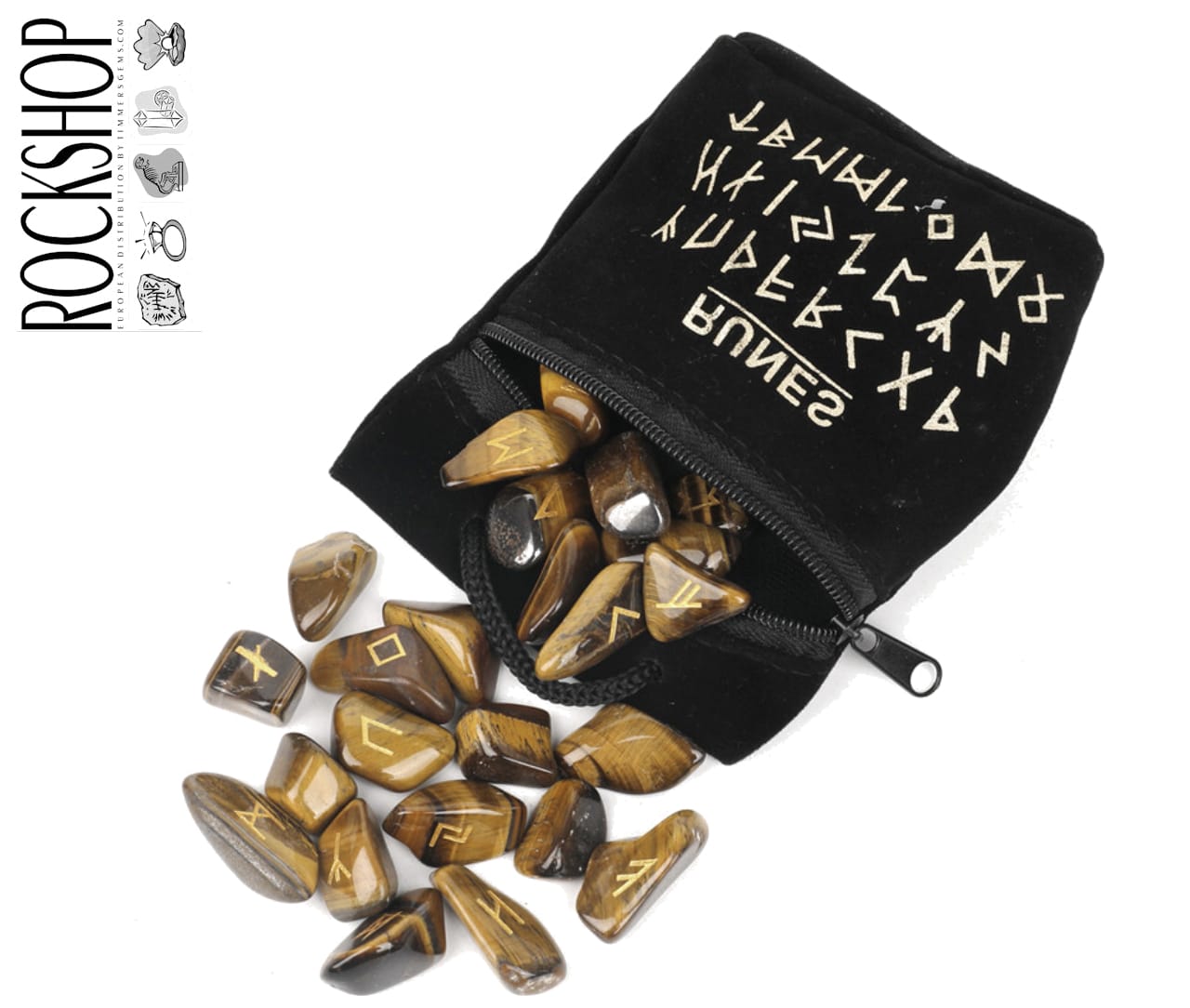
Description
Runic script (or simply runes) is the oldest known script used by the Germanic peoples of Northern Europe, Great Britain, Scandinavia, and Iceland from approximately the 3rd century to the 16th or 17th century. It consists of letters composed of mostly straight and angular lines that can easily be scratched into stone or wood, for example. When used on metal, rounded shapes were also used. The application of runes was also called "rhythms" at the time. Futhark is the name for several Old Germanic runic alphabets. The term for the scientific study of runic alphabets, runic inscriptions, and their history is runology. Runic inscriptions are known from approximately 150 to 1200 AD, and in Scandinavia for several centuries longer. In Dalekarlia (Sweden), farmers were still familiar with runes at the end of the eighteenth century. After 800 AD. On the European continent, writing gradually lost its competitive edge to the Latin alphabet, which was taught in schools. It was used for all sorts of messages, but is best known for its runestones, which serve as memorials. Runic inscriptions can be found in almost all areas where Germanic peoples (including the Vikings) have roamed. Scandinavia, in particular, has a high concentration of runic inscriptions. Many inscriptions are found on runestones, memorial stones erected along important trade routes. The Einangstein near the Slidrefjord in Norway is the oldest known runic inscription still in its original location. The stone stands near burial mounds and remains of bog iron mining. The two Jelling Runestones are perhaps the most famous stones. Near Schleswig, near the ancient town of Haithabu, five runestones can be found. These are reconstructions; the original stones are in the town's museum.


