
Description
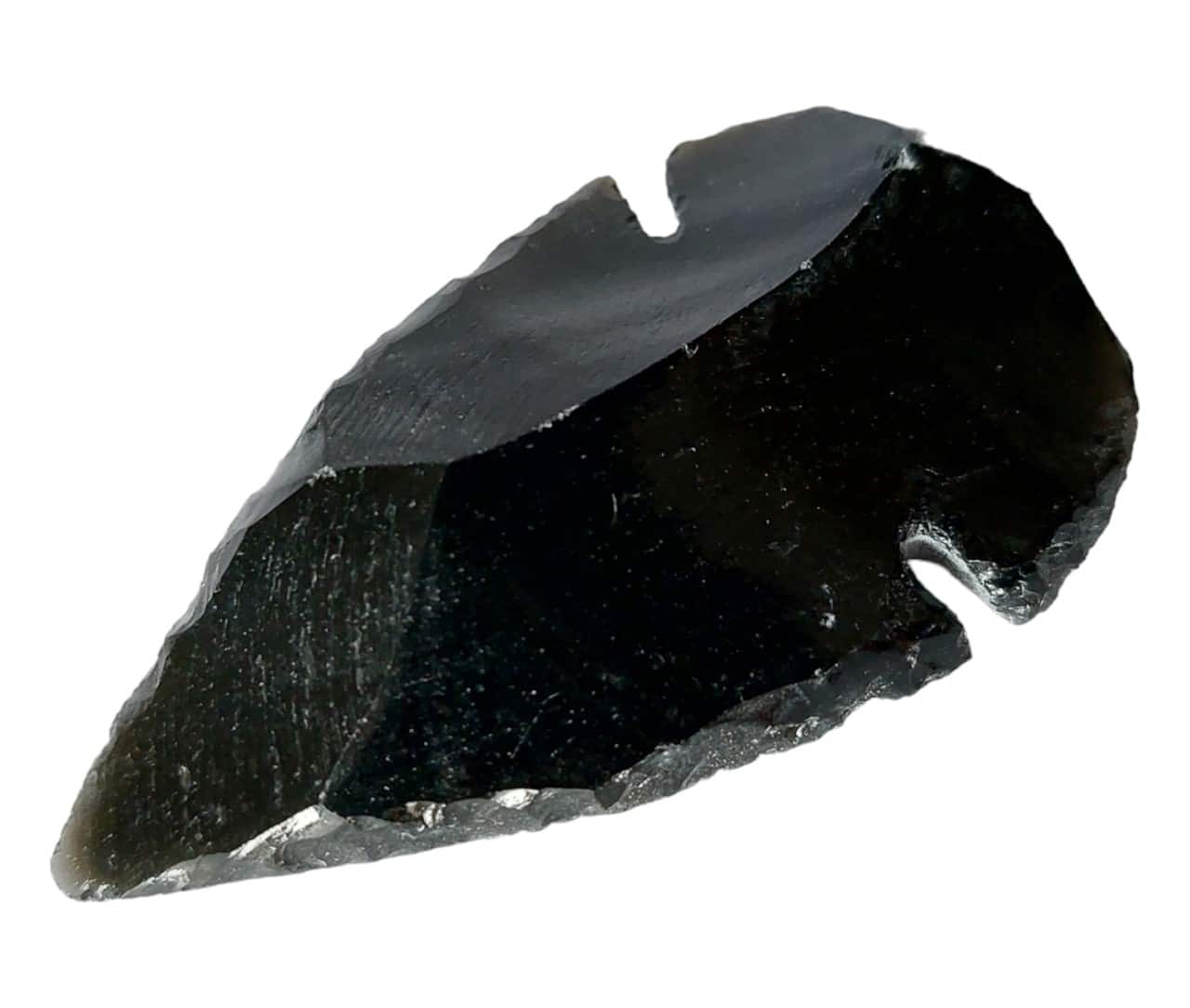
Obsidians are heliocentric. This means they both absorb and reflect light, giving them extra healing properties. This is clearly visible when looking through the stone in natural sunlight. This helps raise your level of consciousness and promotes your spiritual growth. Andara obsidian is one of the stones within the gemstone family with the greatest healing properties. It can be used for all kinds of healing and also helps raise your consciousness and access other dimensions. Andara obsidians come in various energetic vibrations and colors: from light to dark, clear to champagne, silver, blue, amber, and the rarest of all: green, yellow, pink, and lavender. All stones are ideally suited for meditation and even facilitate a deep meditation experience. Andara obsidians are known to have been used by shamans and high priests in the past. Obsidian is a naturally occurring volcanic glass. The name derives from a Roman named Obsius, who is said to have discovered a stone resembling obsidian in Ethiopia in antiquity. Obsidian is formed during the rapid cooling of lava with a water content of up to 3-4%. If the volatile constituents (water, carbon dioxide) content is higher, pumice is formed because the released gases act as a blowing agent. The formation of volcanic glass is highly dependent on the viscosity of the molten lava, which in turn is strongly influenced by the silica content. The higher this content, the slower the fluid flows. Most obsidians have a silica content of 70% or more and are therefore classified as rhyolites. Less frequently, trachitic, andesitic, and phonolithic obsidians are also found, which have a lower silica content. The color of obsidian varies considerably, depending on the impurities it contains. The color is usually dark green to deep black, although granite with a similar composition is a light-colored material. This is usually caused by very finely divided hematite or magnetite. Snowflake obsidian contains inclusions of spherically grown structures, usually of feldspar or cristobalite, called spherulites. They form by spherical crystal growth from a single central growth nucleus. Obsidian is a metastable material that, over time, reverts to its crystalline, more stable form. Volcanic glass is therefore unknown from the Paleozoic and Precambrian eras. In the Stone Age, obsidian was a coveted raw material because it forms razor-sharp cutting edges. It was used for knives and weapons. Today, it is a popular material for art objects and is also used as a semiprecious stone in jewelry. It is then cut as if it were a crystal.


