
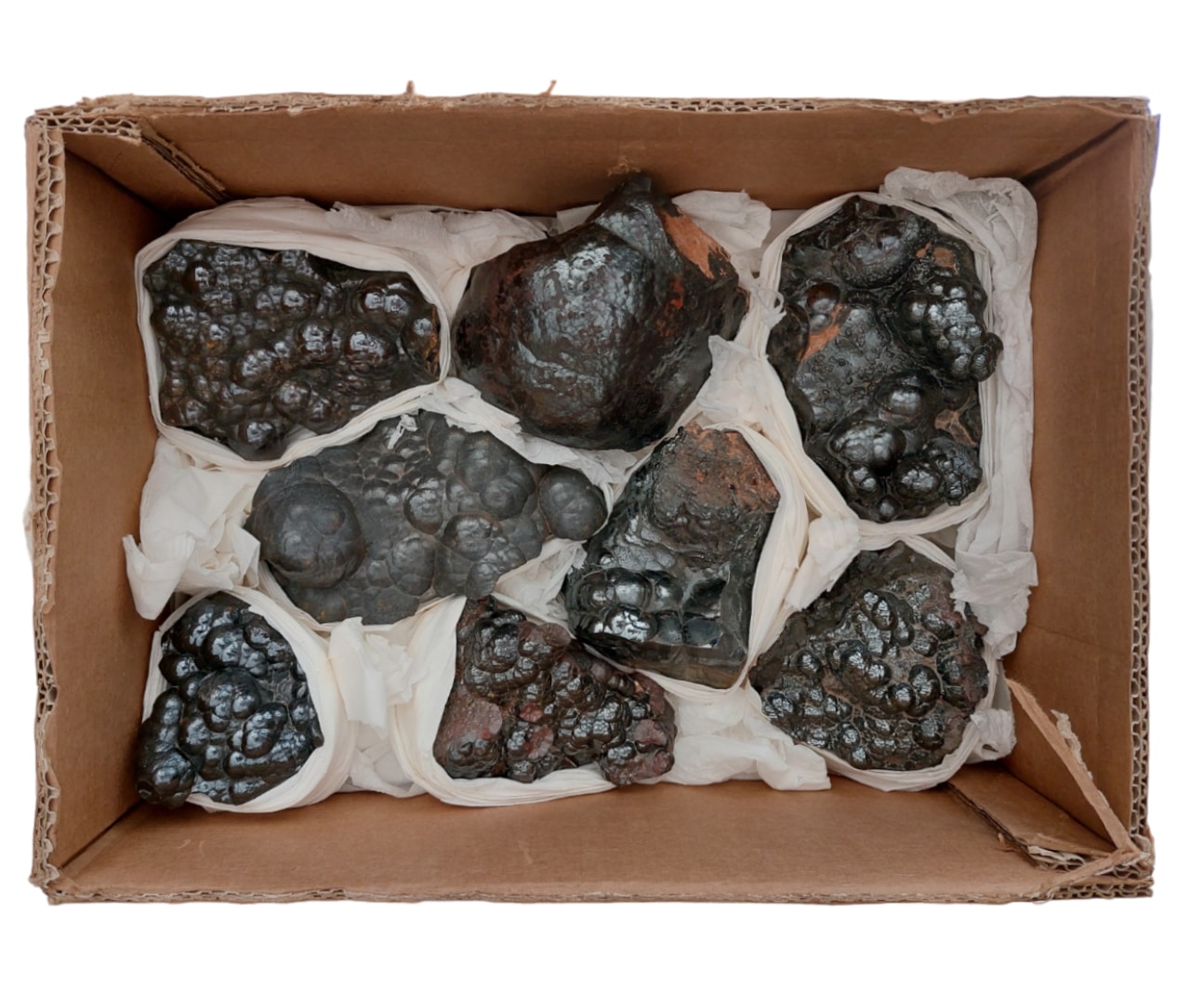
Description
Hematite, derived from the Greek "haima," meaning blood, is a mineral composed primarily of iron(III) oxide, Fe2O3. It is known in varieties such as red bloodstone and grayish-black to black iron luster and micaceous iron. With a hardness of 5 to 6, hematite is known for its characteristic blood-red streak color when rubbed on unglazed porcelain, hence its name. It may contain traces of magnesium, manganese, and titanium. Hematite is both a gangue mineral and a sedimentary mineral and often causes the red coloration of rocks. It is often found in association with other iron ores such as magnetite, limonite, and iron spar. When magnetite transforms to hematite, it is called martite. Hematite is found worldwide, with significant deposits in Europe, Africa, and the United States, and more than half of the world's production comes from China, Brazil, and Australia. It is also present in high concentrations on Mars, contributing to the planet's orange-red color. Pure hematite contains 70% iron, making it the most important iron ore. It is extracted by reacting with carbon at high temperatures and is also used as a polishing agent and mirror due to its high reflectivity. Its red color and non-toxicity make hematite highly suitable for various applications.


