
Description
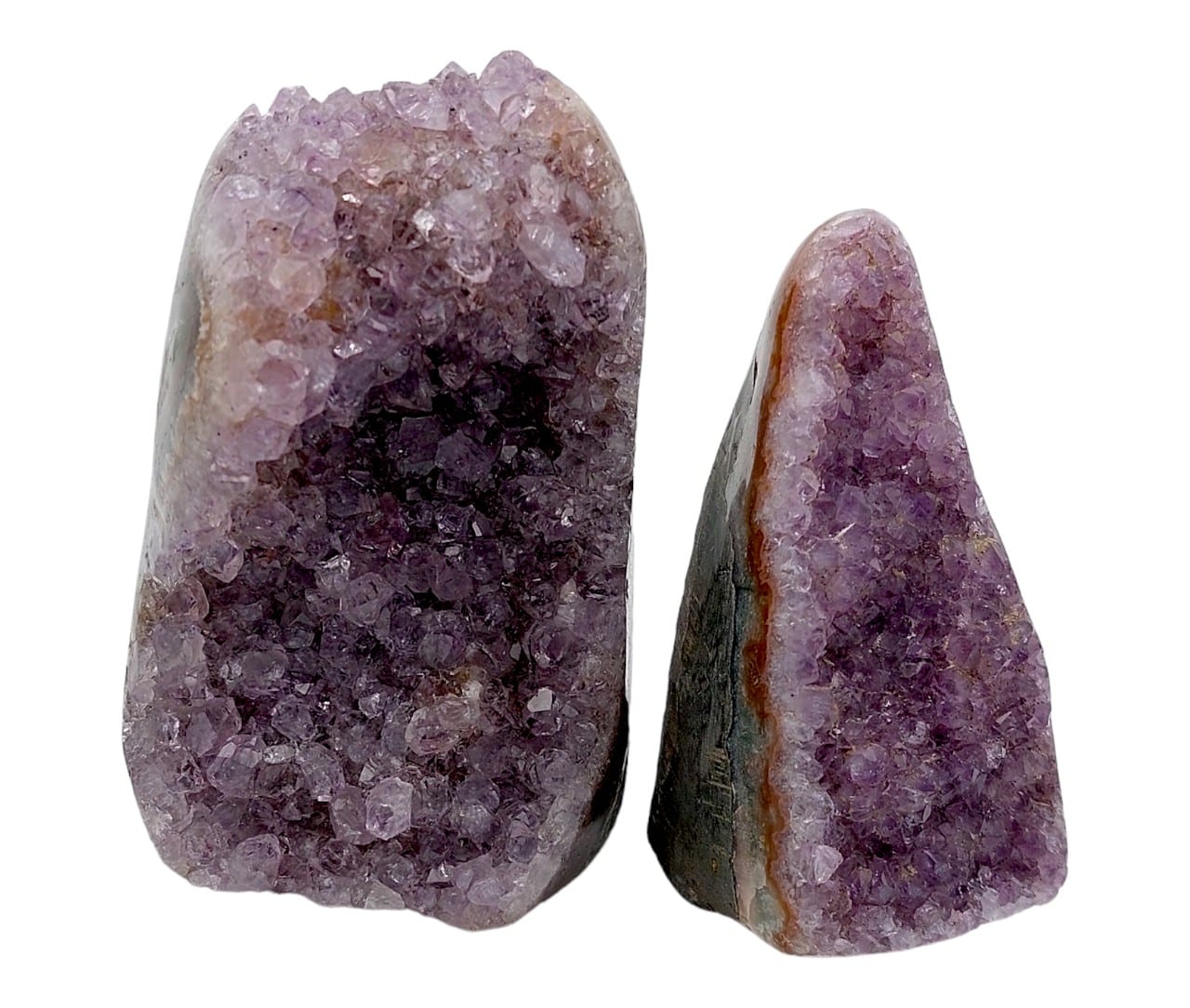
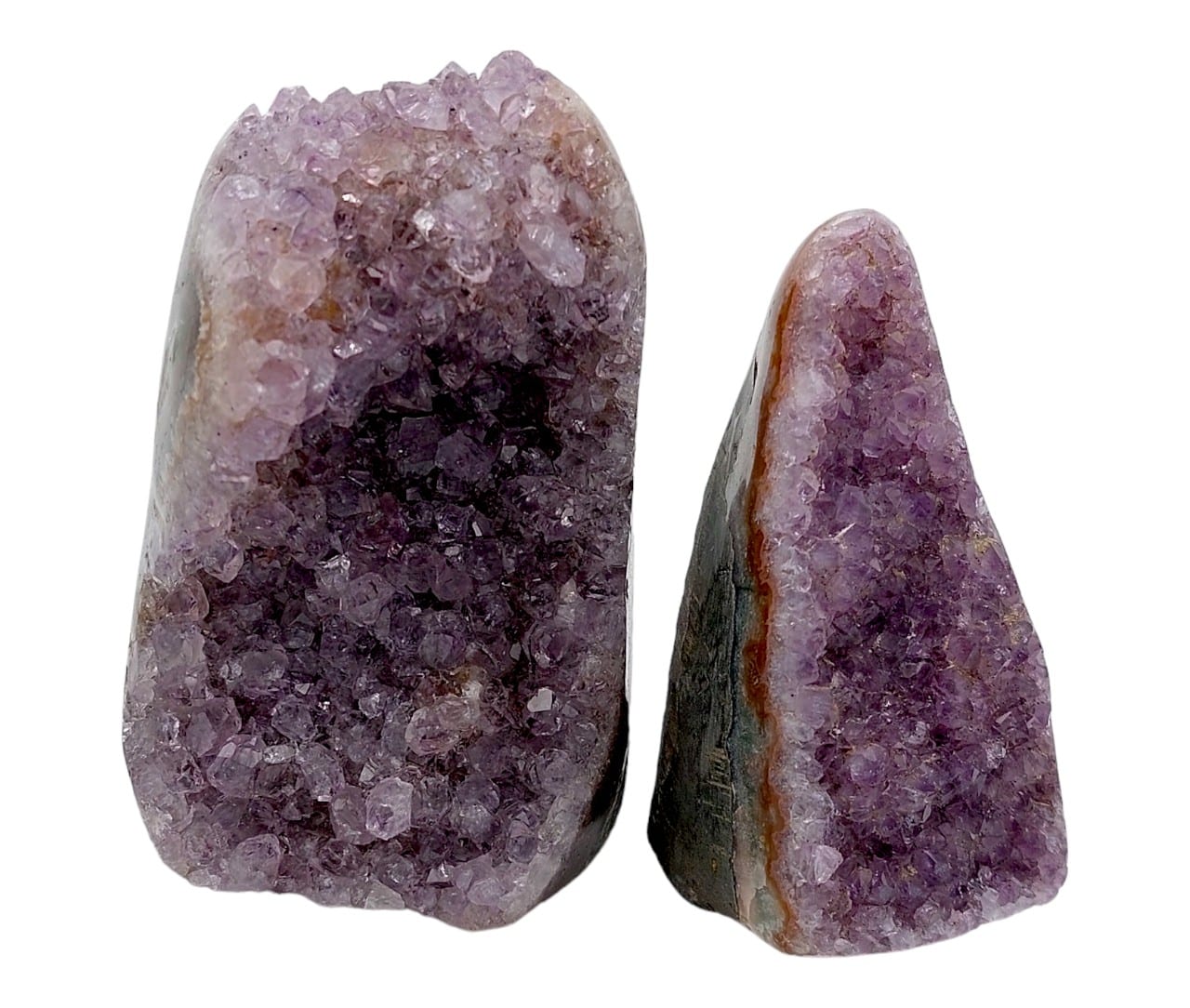
Amethyst, a violet quartz mineral (SiO2), is the most coveted variety within the quartz group. The name comes from the Greek word "amethystos." Known to the Egyptians, Etruscans, and Romans, amethyst was described by Pliny the Elder. In ancient China, it was made into small gems. In the Middle Ages, amethyst was highly prized in Europe and was known as the "bishop's stone," popular with church leaders and attributed with magical properties. It symbolized love, temperance, and protection against sorcery and witchcraft. Jacob van Maerlant declared that the stone wards off drunkenness, which is related to the Greek meaning "against intoxication"; it was believed that wine from an amethyst cup was not intoxicating. Amethyst forms in metamorphic deposits, hydrothermal vents, and alluvial deposits, growing on a substrate. The prisms are often faint, allowing the crystal points to dominate; here the color is most intense. Heating between 470 and 750 degrees Celsius creates light yellow, reddish-brown, green, or colorless varieties. Some amethysts fade in daylight, but their color can be restored with radium irradiation. The color is due to iron combined with ionizing radiation. Amethyst is less attractive under artificial light. Brazil, known for its amethyst deposits since the Middle Ages, mines it primarily in Bahia, Minas Gerais, and Mato Grosso. Recently, "ametrine," a combination of amethyst and citrine with alternating violet and yellow colors, has been mined in Bolivia. However, the transition between the colors is sharply defined.


