


Description
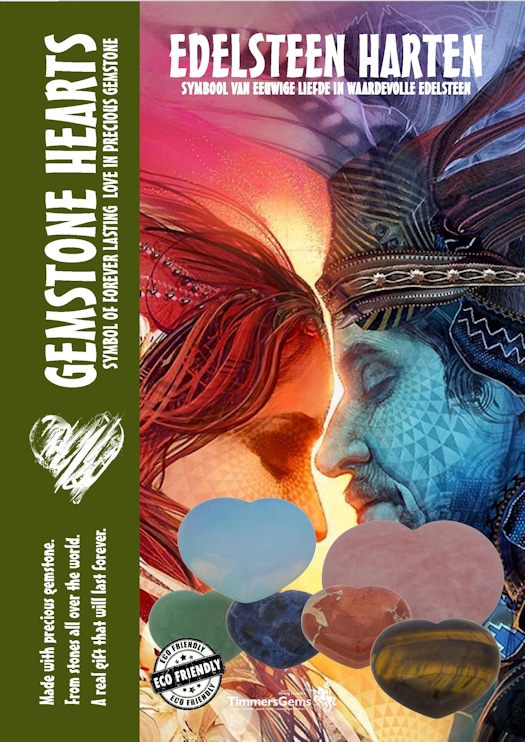
The heart is a very ancient symbol of love used by everyone worldwide. Traditionally, the heart has been chosen in several cultures as the seat of love and emotion. Why the heart was chosen as a symbol of love is not entirely clear. Perhaps because the heart is automatically associated with (emotional) life, and without the heart (read: love), life is not possible. The heartbeat is also influenced by emotions; for example, our heart beats faster when we are in love. The heart wants to be loved. The heart needs love. It is even said that love extends life expectancy, while loneliness has the opposite effect. Everyone knows the expression: "He died of a broken heart.".
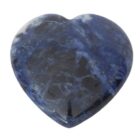
The mineral sodalite is a chlorine-containing sodium aluminum silicate with the chemical formula Na8Al6Si6O24Cl2. The tectosilicate belongs to the feldspathoids. White, gray, pink, green, or azure-blue sodalite has a vitreous to oily luster, a white streak color, and poor cleavage along the crystal plane [110]. Its average density is 2.29 and its hardness is 6. The crystal system is cubic, and the mineral is not radioactive. The name of the mineral sodalite is derived from its chemical composition; the English word "sodium" means "sodium." Sodalite occurs primarily in nepheline syenites, phonolites, and other felsic silica-poor igneous and metamorphic rocks. The type locality is located in the Ilimaussaq Massif in Greenland.


