
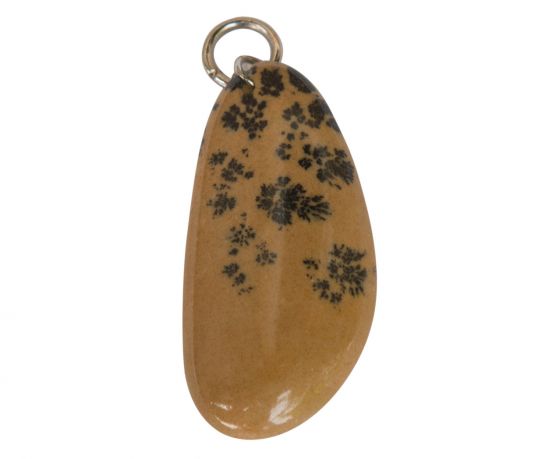
Description
A dendrite is a crystal habit in which the crystal exhibits branched growth. The term is used in crystallography and geology. The term dendrite comes from the Greek word dendron (δενδρον), meaning tree. Dendritic crystal forms are usually associated with fossils. Dendrites form naturally between fissures in rocks. Some varieties of manganese oxides and hydroxides that often exhibit a dendritic growth pattern include: birnessite (Na4Mn14O27·9H2O), coronadite (PBMn8O16), cryptomelane (KMn8O16), hollandite (BaMn8O16), romanechite ((Ba,H2O)Mn5O10), todorokite ((Ba,Mn,Mg,Ca,K,Na)2Mn3O12·3H2O), and others. In cracks in quartz rock, a three-dimensional dendrite develops, forming moss agate. A similar phenomenon is known in other fields as arborescence. The term refers to arbor, the Latin word for tree. This can be seen, for example, in the frost flowers that form when moisture, for example, from warm air, freezes on cold glass. Arborescence is also known from lead trees and chemical gardens.


