

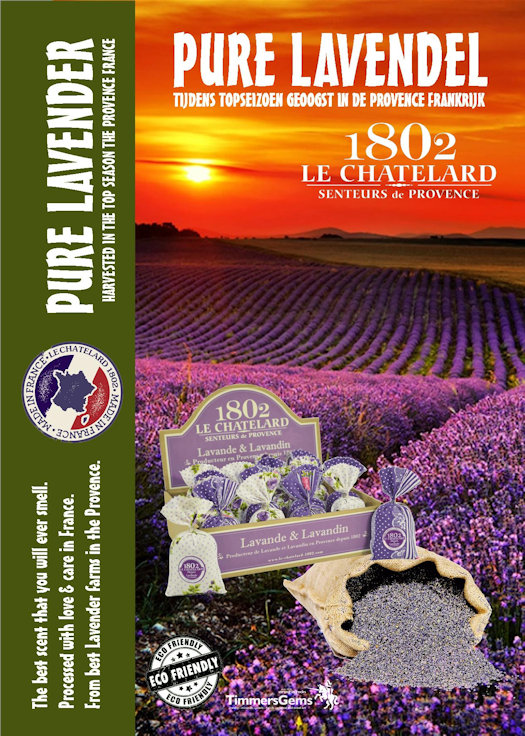
Description
Lavender:
(Lavandula) is a shrub in the mint family (Lamiaceae).
The devil does not like lavender because of its dominant and delightful scent; that repels the devil, or so people from the long-forgotten past believed. Instead of the devil, they actually meant a demon that could make you sick. Germs take to their heels when they smell the scent of lavender because they know they stand no chance against its healing and expelling properties. Lavandula Vera. Lavandula comes from the Latin word lavendulus, which means: 'that which needs to be washed'. The ancient Romans and other peoples of antiquity, such as the Carthaginians, used lavender as soap and added it to baths for its pleasant scent combined with its healing properties.
Characteristics:
Lavender is found in many gardens because of its purple color and the fragrance of its flowers. The shrub grows no taller than a meter and no wider than half a meter. The flowers are pointed and can grow up to eight centimeters long. Lavender is also used as an ornamental plant.
Lavender in Antiquity:
In ancient Egypt, lavender was often used to make perfumes. Cleopatra is said to have seduced Emperor Julius Caesar with it. The Phoenicians may have imported Lavandula into France and Spain along with other herbs. They founded Marseille in 700 BC. Cedar and the essential oil of aspic were mentioned in Jerome Brunschwig's book on distillation from 1500. He referred to it as oleum de spica of Provence. In 1543, Valerius Cordus mentioned three essential oils in his Dispensatorium Noricum: cedar, aspic, and juniper. In antiquity, lavender was primarily used for external applications, such as cleansing the skin, in perfumes, and to repel insects. Later, it was also used for internal applications.
Lavender, love herb:
From ancient times, lavender has been known as a highly stimulating love herb. Drinking a delicious cup of warm lavender tea can help you dream of your loved one and instantly make you romantic. Placing lavender under your mattress or pillow guarantees a passionate night with your partner, and adding lavender buds to cookies or pastries is a true aphrodisiac better than oysters.
Lavender Aroma:
Lavender is cultivated for the lavender oil that can be extracted from the purple flowers. This oil is used as a fragrance in cosmetics, such as soap and perfume. Additionally, lavender oil is used in aromatherapy, for example. Lavender granules can also be placed in sachets in wardrobes. The clothes are perfumed by the evaporating essential oil, and according to some, this repels moths. Furthermore, the lavender flowers are incorporated into potpourri.
Medicinal use:
Lavender can be used internally as a tea infusion and externally as an aromatherapy treatment. Lavender has a calming and soothing effect. Lavender essential oil can be used as an antiseptic.
Hildegard of Bingen (1098-1179) recommends lavender in an elixir for coughs: "If someone boils Speik lavender (three spoonfuls) in wine (one liter) and drinks it lukewarm often, it soothes liver and lung problems, alleviates the dull feeling in the chest, and provides a sharp mind (scientia) and a clear ability to combine (ingenium). If someone doesn't have wine, boil it in water and add honey." (Causae et Curae, 1150). She also writes in her book Physica that if someone with a lot of lice smells lavender, the lice will die.
Lavender can be beneficial for:
First-degree burns, Sunburn, Superficial wounds, Acne caused by oily skin, Itchy conditions,
Eczema, Ringworm, Head lice, Herpes labialis or cold sores, Sore throat, Tonsillitis, Inflammation of the stomatitis and gingivitis, Bad breath, Nasal congestion, Protection against insect bites, and Air purification
Lavender for internal use for mental health issues:
Lavender can help with anxiety disorders. This has been demonstrated in a large-scale study by scientists from Vienna, Austria. Lavender extract is said to be even more effective than a modern chemical antidepressant. The scientists published their study in the latest issue of the International Journal of Neuropsychopharmacology.


