
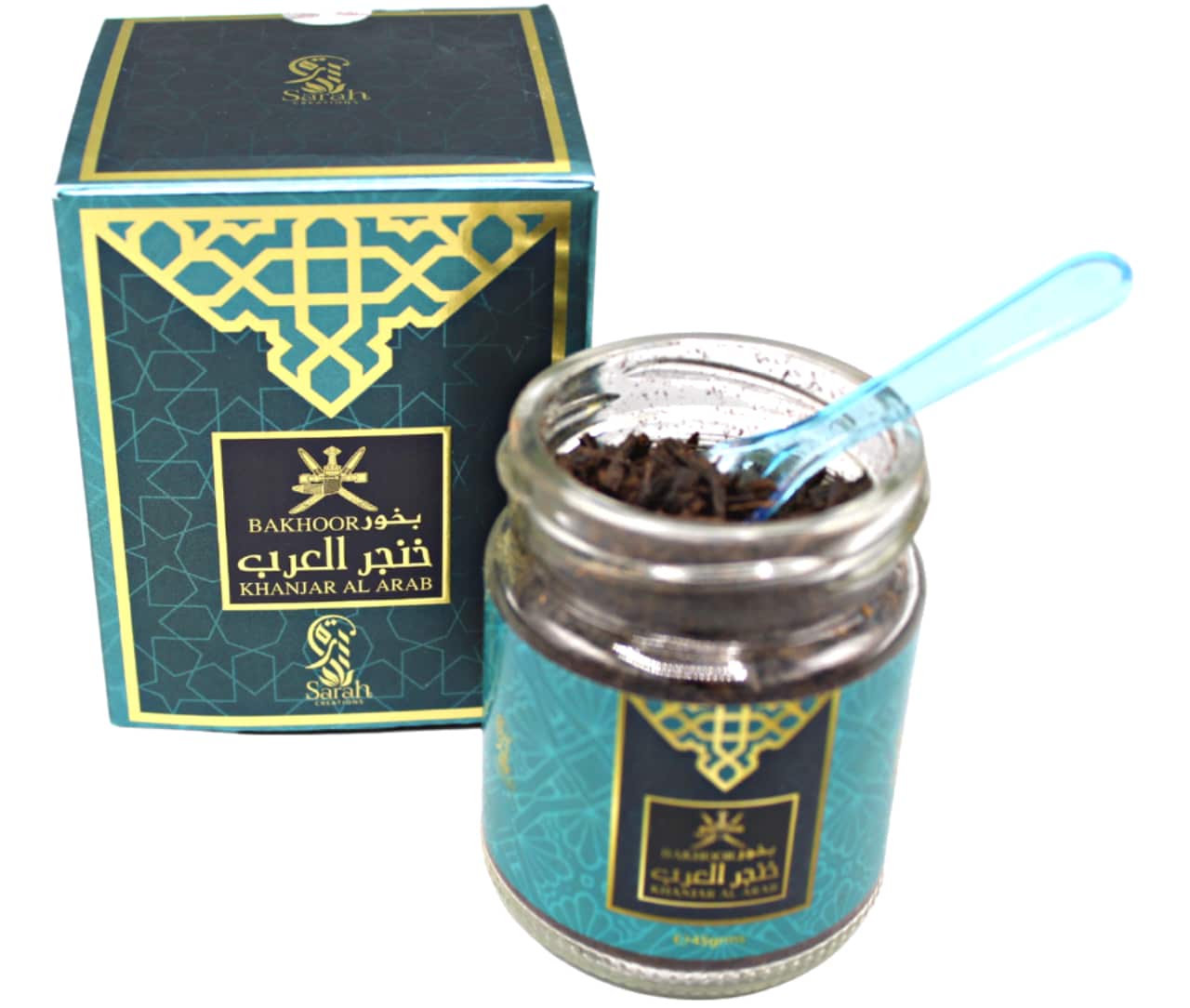
Description
Bakhoor is made primarily from natural ingredients, and each bakhoor maker has their own secret recipe that sets them apart. Some bakhoor makers have inherited the art of making bakhoor from their ancestors and continue to preserve the secret from generation to generation. In Yemen, Oman, and other Arab countries, it's called bakhoor, while in other Gulf countries, it's known as bukhoor. They are the same, but in Yemen and some Arab countries, bakhoor is made by hand using the "boiling method" (in a fire), while other countries use the "baking method," where resins are created by baking (similar to clay, but without direct fire). The longer the bakhoor is stored in a sealed glass jar, the better its aroma. Sometimes, different natural ingredients are used to achieve the best blend, as burning pure oud chips is beyond the reach of many. Mastering the art of bakhoor can take years, and sometimes the skills are passed down from one generation to the next. It was the eminent queen of Yemen, Arwa Suleyhi, who would send large wooden boxes of Bakhoor to Najaf, Karbala, and Egypt during the holy months of Ramadan and Muharram in the lunar calendar. When it was burned, the atmosphere of the holy cities became very pleasant, and the people knew that the gift from Yemen had reached its destination.


