
We use cookies to make your experience better.
TimmersGems has a new website, existing customers also need to register again.
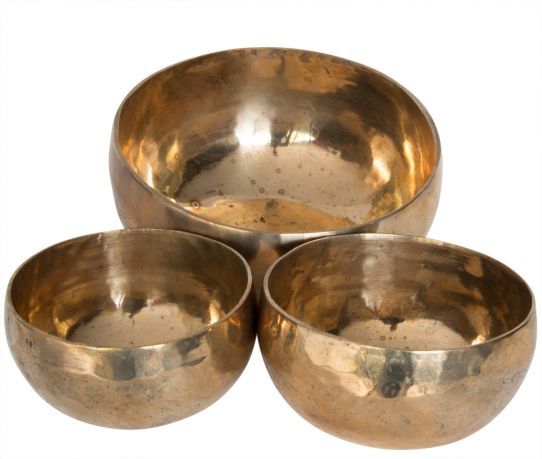


Tadobati singing bowls "highly polished" (0.5 kilograms and more) from Patan - Nepal
Pretty thin singing bowls made of 7 metals in the highest grade in Nepal. Because Timmersgems will not sel low quality from India. TG 40 YEARS WHOLESALE IN REAL SINGING BOWLS!
Availability:
In stock
SKU
2911
- Buy 25 for €55.00 each and save 7%
Tadobati singing bowls "highly polished" (0.5 kilograms and more) from Patan - Nepal is available to buy in increments of 1
A short story about our singing bowls.
Bowls (also known as 'Himalayan bowls' or 'ring' or suzu gongs in Japan) are a kind of bell, specified as a standing bell and no hanging or mounted on a stem. Standing call touched with their soil ground. The walls and the edge of the singing bowl vibrate and thus create noise. Singing bowls originate from Asia and were used as part of the Bon Tantric Buddhism. Today they come worldwide in many spiritual traditions such as meditation, relaxation, health, well-being and religious practice. Singing bowls are originally from Nepal, India, Japan and Korea. The best kind comes from the Himalayan region and are often called Tibetan bowls. Origin history and use: In the Buddhist singing bowls are used to support meditation, trance and touching during prayer. Chinese Buddhists use the singing bowl for example, together with a wooden fish while reciting the prayer and save the scale times a certain part of their singing so-called Sutra or Mantra. In Japan and Vietnam scales used a lot during the song but also to interrupt an activity and change. The use of singing bowls in Tibet is the subject of many stories, some people say they are used and have been for meditation, others say the magic items to transform (or any object) Traditionally bowls made of Panchaloha (meaning 5 metals in Sanskrit) A mixture of Bronze, Copper, Tin, Zinc and other metals often with the addition of gold and of silver and nickel (7 metals) Antique singing bowls produce polyphonic, poly harmonic overtones that are unique to each dish. The notes described above indicate a high quality alloy of bronze to. Making bowls is often described as a lost tradition and craftsmanship. Craftsmen still make a modest production in the hidden, poorly accessible parts of Nepal.
FEATURED PRODUCTS