
Beschrijving
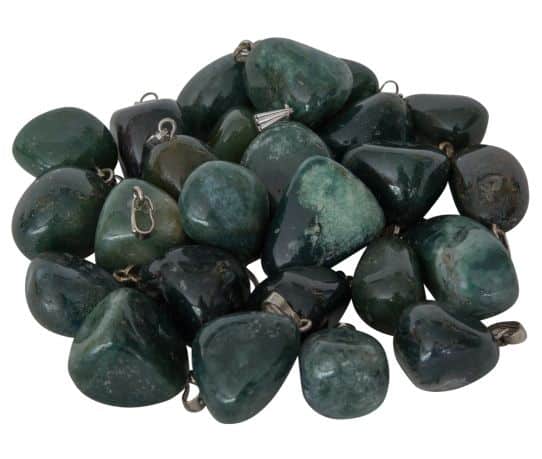
Mosagaat is een halfedelsteen. De steen dankt zijn naam aan de groenige insluitsels (tekeningen) die op mos lijken. Mosagaat is een variëteit van agaat. De witte ondergrond van het mosagaat bestaat uit kwarts. De dendritische insluitsels zijn chloriet of ijzer en mangaan mineralen welke een grote gelijkenis hebben met mos. Afhankelijk van de valentie van het metaal vertonen de insluitsels andere kleuren. Mosagaat bevat dus ondanks de naam geen organische materiaal. De steen wordt gevormd uit verweerd vulkanisch gesteende. De chemische structuur van mosagaat is identiek aan die van jaspis, vuursteen en hoornkiezel, allen eveneens varianten van kwarts. De groen/blauw/rood/geel en bruine stenen worden gepolijst/geslepen gebruikt voor sieraden of als talisman. De belangrijkste vindplaatsen van mosagaat zijn India, China, VS en incidenteel in Zuid-Afrika en Brazilië. Mosagaat wordt in de VS onder andere gevonden in de afzettingen van de Yellowstone Rivier en zijn zijrivieren, tussen Sidney (Montana) and Billings (Montana). In deze variant, Montana mosagaat genoemd, wordt de rode kleur veroorzaakt door ijzer(III)oxide (roest) en het zwart door mangaan(IV)oxide.


